
Foundations of the Digital Competition Landscape

The convergence of competitive gaming and high-stakes betting has created a complex ecosystem where the boundaries often seem blurred. At the heart of esports lies a rigorous framework of meritocracy, where thousands of hours of practice translate into milliseconds of reaction time. Unlike traditional forms of entertainment, digital competition demands a symphony of cognitive functions, including spatial awareness, strategic planning, and refined motor skills. This isn’t just about playing games; it’s about mastering a digital environment through pure repetition and analysis.
On the other side of the spectrum, gambling operates on the principles of probability and randomness. While some variants of gambling, like poker, involve a degree of psychological warfare and mathematical modeling, the core mechanic remains the unknown outcome controlled by a generator or physical physics. The thrill comes from the unpredictability, a stark contrast to the predictable execution of a trained professional player. Understanding the structural differences is essential for anyone looking to navigate these multi-billion dollar industries without losing sight of what drives success in each.
The cultural perception of both fields is shifting. Esports is increasingly viewed as a legitimate athletic endeavor, complete with training facilities, nutritionists, and rigorous schedules. Gambling, meanwhile, has undergone a digital transformation, moving from the smoky halls of physical casinos to sophisticated online platforms that use complex algorithms to ensure fairness. Despite these advancements, the fundamental debate remains: is the outcome determined by the individual’s input or by external factors beyond their control?
A critical distinction is the concept of the ‘Skill Floor’ and the ‘Skill Ceiling’. In competitive gaming, the floor is often high, requiring significant learning just to participate at a basic level, while the ceiling is practically infinite. In many gambling formats, the floor is low, allowing anyone to participate immediately, but the ceiling is capped by the house edge or the inherent randomness of the system. This structural difference dictates the type of engagement a participant experiences over the long term.
Economic incentives also play a role in how these activities are perceived. Esports athletes earn their living through prize pools, sponsorships, and streaming, which are direct reflections of their marketability and performance. In gambling, the financial return is usually a direct function of the risk taken, with the odds always slightly favoring the provider. This economic reality further separates the ‘grind’ of the professional gamer from the ‘risk’ of the recreational gambler.
Finally, we must consider the role of variance. Even in the most skill-heavy esports titles, a small amount of luck exists—a random critical hit, a favorable map spawn, or a technical glitch. Conversely, professional gamblers seek to minimize variance through volume and bankroll management. The intersection of these two worlds occurs where the pursuit of consistency meets the reality of unexpected variables, creating a fascinating grey area for analysts and fans alike.
The Anatomy of Skill in Professional Gaming
True mastery in esports is not an accident; it is the result of a deliberate and agonizingly slow process of refinement. When we talk about skill, we are referring to a combination of mechanical execution and tactical intelligence. Mechanical skill involves the physical ability to perform precise movements—flicking a mouse to a specific pixel or executing a complex sequence of button presses in a fighting game within a 1/60th of a second window. This level of dexterity requires neurological pathways developed over years of consistent play.
Tactical intelligence, or ‘game sense,’ is the second pillar of esports skill. This involves the ability to read the opponent’s intentions, predict their movements, and make split-second decisions based on incomplete information. It is akin to a grandmaster’s vision in chess, where the current state of the board implies a multitude of future possibilities. A top-tier player doesn’t just react; they anticipate, forcing the game to unfold according to their strategic design.
The Components of the Competitive Edge
- APM (Actions Per Minute): A metric often used in strategy games to measure how many commands a player can issue accurately in sixty seconds.
- Map Awareness: The ability to process peripheral information from a mini-map while simultaneously focusing on central combat.
- Meta-Knowledge: Staying updated on the latest balance patches and understanding which characters or strategies are currently optimal.
- Communication: In team-based games, the ability to relay concise, actionable information under extreme pressure.
- Psychological Resilience: The ‘mental game’ required to recover from a mistake or a lost round without falling into a performance-degrading state known as ’tilt.’
The measurement of skill is also highly quantifiable. Through sophisticated data analytics, teams can track everything from ‘average time to kill’ to ‘resource efficiency.’ This data-driven approach allows players to identify specific weaknesses and train them in isolation, much like a traditional athlete might work on their free-throw percentage or sprint mechanics. The reliance on objective data reinforces the position of esports as a merit-based discipline.
Furthermore, the evolution of the ‘Meta’—the most effective tactics available—ensures that skill is not a static attribute. A player who was world-class two years ago might be obsolete today if they cannot adapt to new game mechanics. This constant need for evolution means that ‘skill’ in gaming also includes the capacity for continuous learning and adaptation, a trait that is less relevant in static gambling environments where the rules and odds remain constant over decades.
Ultimately, the hallmark of skill is consistency. A professional player is expected to perform at a high level regardless of the day or the opponent. While luck might decide a single engagement, skill determines the outcome of a thousand. This statistical inevitability is what allows professional teams to secure multi-year contracts and massive sponsorships, as their success is seen as a reproducible asset rather than a lucky streak.
Randomness and the Mathematical Core of Gambling

To understand gambling, one must look past the flashy lights and interfaces and peer into the world of probability theory. At its core, every gambling game is built on a mathematical model designed to ensure that, over a large enough sample size, the house maintains a specific advantage. This is the fundamental difference between a competitive sport and a game of chance: in the former, the better player wins; in the latter, the system eventually wins.
However, the human brain is notoriously bad at processing true randomness. We look for patterns where none exist, leading to the ‘Gambler’s Fallacy’—the belief that if an event has happened frequently in the past, it is less likely to happen in the future, or vice versa. In reality, a roulette wheel has no memory. Each spin is an independent event. This disconnect between mathematical reality and human perception is what fuels the gambling industry and creates the illusion of ‘luck’ as a tangible force.
Defining Different Levels of Randomness
Not all gambling is created equal. There is a clear distinction between games of pure chance and games where player decision-making can influence the outcome, though not override the house edge. Understanding these categories helps clarify where the ‘skill’ argument in gambling actually holds water.
| Game Category | Primary Driver | Role of Player Skill | Outcome Determinant |
|---|---|---|---|
| Slots / Lottery | RNG (Random Number Generator) | Negligible | Pure Mathematics |
| Roulette / Craps | Physical Physics | Low (Betting Strategy Only) | Statistical Probability |
| Blackjack | Probability / Memory | Moderate (Card Counting) | Relative Strategy |
| Poker | Psychology / Odds | High (Peer-to-Peer) | Game Theory / Skill |
| Sports Betting | Knowledge / Analysis | High (Informed Prediction) | Real-World Performance |
In the table above, we see that as we move toward poker and sports betting, the element of skill increases. Yet, even in professional sports betting, the ‘skill’ lies in the ability to identify value—finding odds that are mispriced by the bookmaker—rather than the ability to control the physical outcome of the match. The gambler is an observer and an analyst, whereas the esports player is the active participant shaping the result.
The concept of RNG (Random Number Generator) is a bridge between these two worlds. Many modern video games use RNG to determine loot drops or critical hit chances, introducing a ‘gambling’ element into the skill-based environment. This has led to intense debates within the gaming community about the ‘competitive integrity’ of games that rely too heavily on random elements, as it can occasionally allow a less skilled player to defeat a superior one through sheer luck.
Ultimately, gambling is about the management of expected value (EV). A successful gambler doesn’t look for a ‘big win’ but rather for a series of bets where the probability of winning multiplied by the payout is greater than the cost of the bet. This cold, calculated approach is the only way to find success in a world governed by randomness, turning a game of luck into a business of statistical margins.
The Psychological Grip: Adrenaline vs Mastery
The neurological response to esports and gambling is surprisingly similar, yet the underlying triggers are vastly different. In gambling, the brain’s reward system is activated by uncertainty. The ‘near-miss’—where a player almost wins—triggers a surge of dopamine that is often more powerful than the win itself. This creates a cycle of anticipation that keeps the participant engaged, regardless of the financial outcome. It is a biological response to the ‘what if’ scenario.
In contrast, the dopamine hit in esports comes from achievement and the feeling of self-efficacy. When a player executes a perfect maneuver after hours of practice, the brain rewards the mastery of a skill. This is the ‘flow state,’ a psychological phenomenon where a person is fully immersed in an activity, losing sense of time and self. Mastery-based rewards tend to be more sustainable and lead to long-term satisfaction, whereas uncertainty-based rewards can lead to compulsive behaviors.
The tension between these two psychological states is evident in ‘loot boxes’ and other ‘gacha’ mechanics within video games. These systems insert a gambling-style reward loop into a skill-based environment. Players may find themselves more excited about the random skin they pulled from a chest than the victory they just achieved on the battlefield. This hybridization is a deliberate design choice by developers to maximize engagement by tapping into both the desire for mastery and the thrill of the unknown.
We must also consider the ‘sunk cost fallacy’ in both arenas. In esports, a player might feel compelled to keep playing a game they no longer enjoy because they have invested thousands of hours into their skill level. In gambling, a player might continue to bet to ‘chase losses,’ hoping to recover what they’ve spent. While the motivation is different, the result—an inability to walk away—is a shared psychological risk that requires high levels of self-awareness to manage.
Understanding the ‘why’ behind the play is crucial. Is the goal to get better at a craft, or is it to experience the rush of a potential windfall? The former builds resilience and discipline, while the latter tests the boundaries of self-control. Most professional esports athletes have a very ‘un-gambler-like’ mentality; they hate losing more than they love winning, leading them to focus on eliminating errors rather than hoping for miracles.
In the end, the psychological divide comes down to agency. An esports player feels they are in the driver’s seat, steering their destiny through effort. A gambler, even a strategic one, must eventually surrender to the fact that they are a passenger on the ship of chance. This difference in agency defines the emotional landscape of each activity, shaping the communities and personalities that gravitate toward them.
Institutional Recognition and Legal Frameworks

The legal distinction between esports and gambling is often a matter of intense debate among regulators. Most jurisdictions define gambling using a three-pronged test: consideration (a bet), chance (a random outcome), and prize (a reward). If any of these are absent, it is generally not considered gambling. Esports typically circumvents the ‘chance’ element by arguing that the outcome is determined primarily by skill, which allows it to be categorized differently under the law.
However, the rise of ‘skin gambling’ and ‘match-fixing’ has forced regulators to take a closer look. Skin gambling involves using in-game cosmetic items as currency for betting on professional matches, often on unregulated third-party sites. This has created a shadow economy that mimics traditional sports betting but often lacks the same age gates and consumer protections. It is here that the line between gaming and gambling becomes dangerously thin, especially for younger audiences.
Regulatory Differences at a Glance
- Esports: Regulated primarily by game publishers (private entities) and occasional sports commissions. Focus is on ‘competitive integrity’ and ‘anti-cheat.’
- Gambling: Regulated by state or national gaming boards. Focus is on ‘taxation,’ ‘consumer protection,’ and ‘anti-money laundering.’
- Licensing: Gambling operators must undergo rigorous background checks and financial audits; esports teams generally do not.
- Advertising: Gambling ads are often heavily restricted in terms of time and content, whereas esports sponsorships are currently less regulated.
The ‘Skill Game’ designation is a coveted legal status. In many US states and European countries, if a game can be proven to be more than 50% skill-based, it can be played for real money without a gambling license. This has led to the rise of platforms where players can bet on their own performance in games like League of Legends or Counter-Strike. This is ‘skill-based wagering,’ and while it involves money, it is legally distinct from betting on a horse race because the participant controls the outcome.
We are also seeing the professionalization of esports through standardization. Groups like the Esports Integrity Commission (ESIC) work to identify and punish match-fixing, ensuring that the results of tournaments remain credible. This is vital because if a sport is perceived to be ‘fixed,’ it loses its skill-based status and begins to resemble a rigged game of chance, destroying its commercial value.
As the industry matures, we can expect more ‘convergence’ in regulation. Governments are increasingly looking to apply gambling-style protections to certain video game mechanics, specifically those that resemble slot machines. The goal is to protect the consumer while still allowing for the growth of the legitimate competitive scene. This evolution reflects a growing social awareness that ‘digital’ does not mean ‘consequence-free.’
Training Regimes: The Grind vs The Strategy
The day-to-day life of an esports professional is closer to that of an Olympic athlete than a casual gamer. A typical schedule might include 8-10 hours of ‘scrims’ (practice matches), followed by individual ‘VOD review’ (analyzing footage), and physical exercise to prevent repetitive strain injuries. This ‘grind’ is what builds the muscle memory and situational awareness necessary to compete at the highest level. There is no shortcut; you cannot buy your way to the top of an esports leaderboard.
In gambling, the ‘training’ is entirely different. It involves bankroll management and mathematical study. A professional poker player or sports bettor spends their time studying spreadsheets, calculating ‘equity,’ and learning to manage the emotional volatility of losing streaks. They aren’t practicing reflexes; they are practicing discipline. The ‘grind’ in gambling is the ability to stay the course and follow a proven system even when the results are temporarily unfavorable due to variance.
Comparative Training Elements
| Feature | Esports Professional | Professional Gambler |
|---|---|---|
| Physical Training | Reflexes, Posture, Hand-Eye Coordination | Stamina for long sessions, Stress reduction |
| Mental Training | Quick Decision Making, Team Communication | Probability calculation, Emotional control |
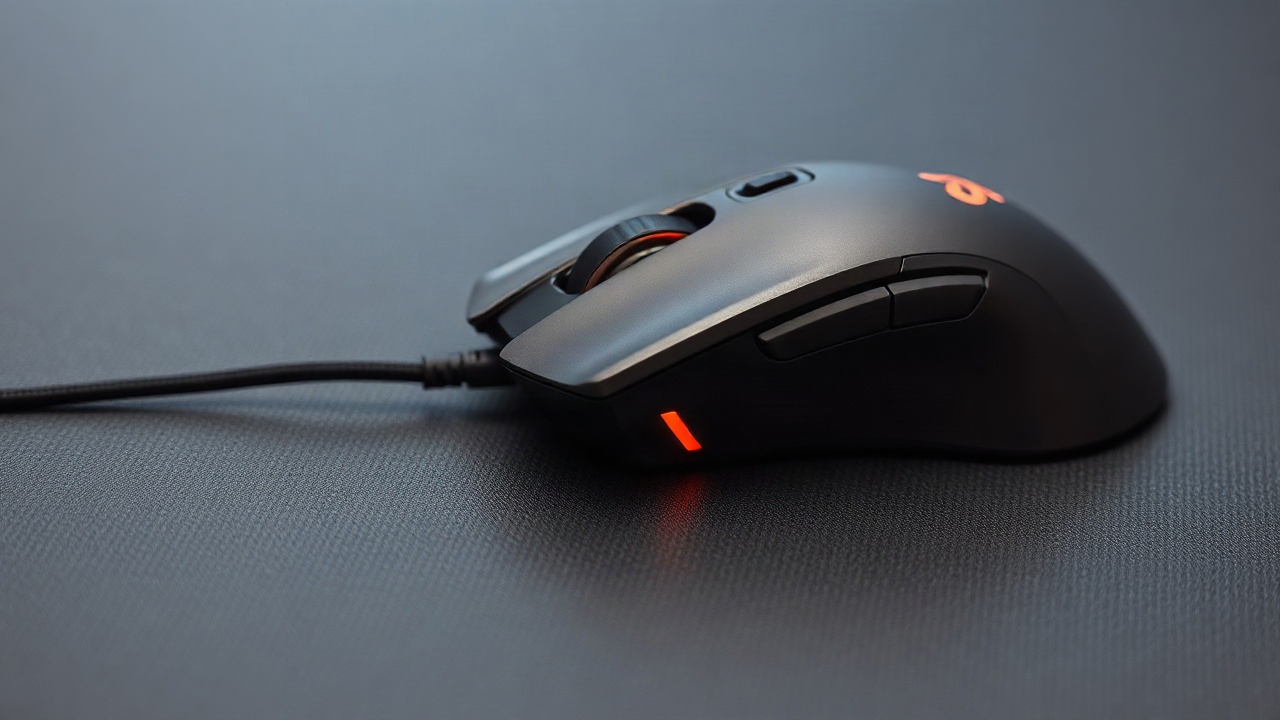
| Tooling | High-end PCs, specialized mice, low-latency monitors | Data software, odds trackers, spreadsheets |
| Goal | To be the best performer in the room | To have the best statistical edge in the room |
The concept of ‘Analysis’ is the common thread. Both groups are obsessed with data. An esports player will look at ‘heat maps’ of where they die most often on a map, while a gambler will look at ‘closing line value’ to see if they are beating the market. The difference is in the application: the player uses data to change their physical behavior, while the gambler uses data to change their financial behavior.
There is also the element of ‘scouting.’ In esports, teams study their opponents’ tendencies to find exploitable habits. In gambling, specifically sports betting, the ‘scouting’ is about the athletes themselves. The irony is that the professional gambler’s success often depends on their ability to accurately predict the skill-based performance of the esports player. One is the actor, the other is the critic.
For the average person, the lesson is clear: if you want to succeed in either field, you must treat it like a job. The ‘luck’ of the beginner is a myth that quickly evaporates under the pressure of professional-grade competition or the cold reality of the house edge. Success in both fields requires a level of dedication that most people are unwilling to provide, which is why only a tiny fraction of participants ever turn a profit or win a trophy.
The Role of Technology and AI in Shaping the Future
Technology is the canvas upon which both esports and gambling are painted. In esports, the move toward cloud gaming and 5G connectivity is reducing the barrier to entry, allowing more players from around the world to compete with minimal ‘ping’ (latency). This expands the talent pool and raises the overall skill level of the global scene. As the hardware becomes more standardized, the focus shifts even more heavily onto the human element of skill.
In the world of gambling, Artificial Intelligence is the new frontier. AI is being used to create more personalized gaming experiences, but also to identify ‘advantage players’ (those who are too good at winning). On the player side, bots and algorithms are used to scan thousands of betting markets in seconds to find tiny discrepancies. This has turned professional gambling into an ‘arms race’ of technology, where the ‘skill’ is often in the coding of the software rather than the intuition of the person.
We are also seeing the emergence of Blockchain technology in both sectors. For gambling, it offers ‘provably fair’ systems where the randomness of a roll can be verified by the user, eliminating the fear of a rigged system. For esports, it offers a way to track player statistics and ownership of digital assets (like rare skins) with total transparency. This technological layer adds a level of trust that was previously missing from digital interactions.
However, technology also introduces new ways to ‘cheat’ the skill-vs-luck balance. In esports, ‘aimbots’ and ‘wallhacks’ use software to give a player superhuman abilities, effectively removing the need for skill. In gambling, sophisticated ‘bot nets’ can collude at poker tables to fleece unsuspecting human players. The battle between the ‘integrity’ of the game and the ‘exploitation’ of the technology is ongoing and will define the next decade of both industries.
The ultimate goal of technology in this space is to create a frictionless environment. Whether it’s the 360Hz monitor that allows an esports pro to see a frame before their opponent, or the mobile app that allows a gambler to place a bet in one tap, the tech is designed to remove the distance between the intent and the action. This high-velocity environment amplifies both the impact of skill and the speed at which luck can change one’s fortunes.
As we look forward, the distinction between ‘virtual’ and ‘real’ will continue to fade. Virtual Reality (VR) esports will require physical athleticism, bringing gaming even closer to traditional sports. Meanwhile, ‘gamified’ gambling—where players must complete skill-based mini-games to unlock better odds—is already being tested in Las Vegas. The ‘granularity’ of the line between skill and luck is becoming finer every day, driven by the relentless pace of digital innovation.
Final Verdict: Identifying Your Path
When choosing where to invest time and resources, one must be honest about their motivations. Esports is a path of self-improvement. It offers a clear trajectory: the more you practice, the better you get, and the more you win. It is a meritocracy that rewards discipline and cognitive development. However, the path is grueling, and the window of peak physical performance is narrow, often closing by a player’s mid-twenties.
Gambling, when approached professionally, is a path of risk management. It doesn’t require fast reflexes, but it does require a ‘mathematical soul’ and the ability to remain calm in the face of financial loss. For the vast majority of people, gambling should remain a form of entertainment—a ‘pay-to-play’ experience where the cost of the bet is the price of the thrill. Expecting to win in the long term without a professional-grade statistical edge is a recipe for frustration.
Checklist for Evaluating an Activity
- Control: Can my actions directly change the outcome? (If yes, Skill-heavy).
- Predictability: If I do the exact same thing twice, will the result be the same? (If yes, Skill-heavy).
- House Edge: Is there a built-in mathematical disadvantage? (If yes, Gambling).
- Feedback Loop: Does the game tell me exactly what I did wrong? (If yes, Skill-heavy).
- Barrier to Entry: Can a complete novice win against a veteran? (If yes, high Luck/Randomness).
The ‘line’ between skill and luck is not a static border but a gradient. Every activity we engage in falls somewhere on this spectrum. Even the most skill-based career involves the ‘luck’ of being in the right place at the right time. The key is to maximize the areas where you have control and minimize your exposure to the areas where you don’t. In the world of digital competition, this means focusing on your mechanics and strategy while respecting the ‘variance’ that makes the game exciting.
Whether you are a fan watching a million-dollar tournament or someone placing a casual wager on the outcome, understanding the mechanics of skill vs luck enhances the experience. It allows you to appreciate the ‘impossible’ shot of a pro gamer for what it is—a triumph of human potential over entropy—and to see the ‘big win’ at the casino for what it is—a momentary alignment of the stars in a mathematical universe. By recognizing these forces, we can navigate the digital world with greater clarity and purpose.