
The Primitive Roots of Uncertainty and Survival

Risk is not a modern luxury or a flaw in human character; it is a fundamental survival mechanism etched into our genetic code. Long before the invention of currencies or casinos, our ancestors faced a constant stream of high-stakes decisions. Choosing whether to cross a wide river or hunt a dangerous predator involved a calculation of probability. Those who took no risks often found themselves without resources, while those who took calculated risks survived to pass on their genes. This evolutionary pressure created a biological framework that rewards the exploration of the unknown.
From a biological perspective, risk-taking is linked to the foraging theory. In an environment where food is scarce, an organism must decide between a guaranteed small reward and a risky large reward. If the small reward is insufficient for survival, the risky option becomes the only rational choice. This explains why humans often gamble more aggressively when they feel they have nothing to lose. The brain interprets a lack of resources as a signal to engage in high-variance behavior.
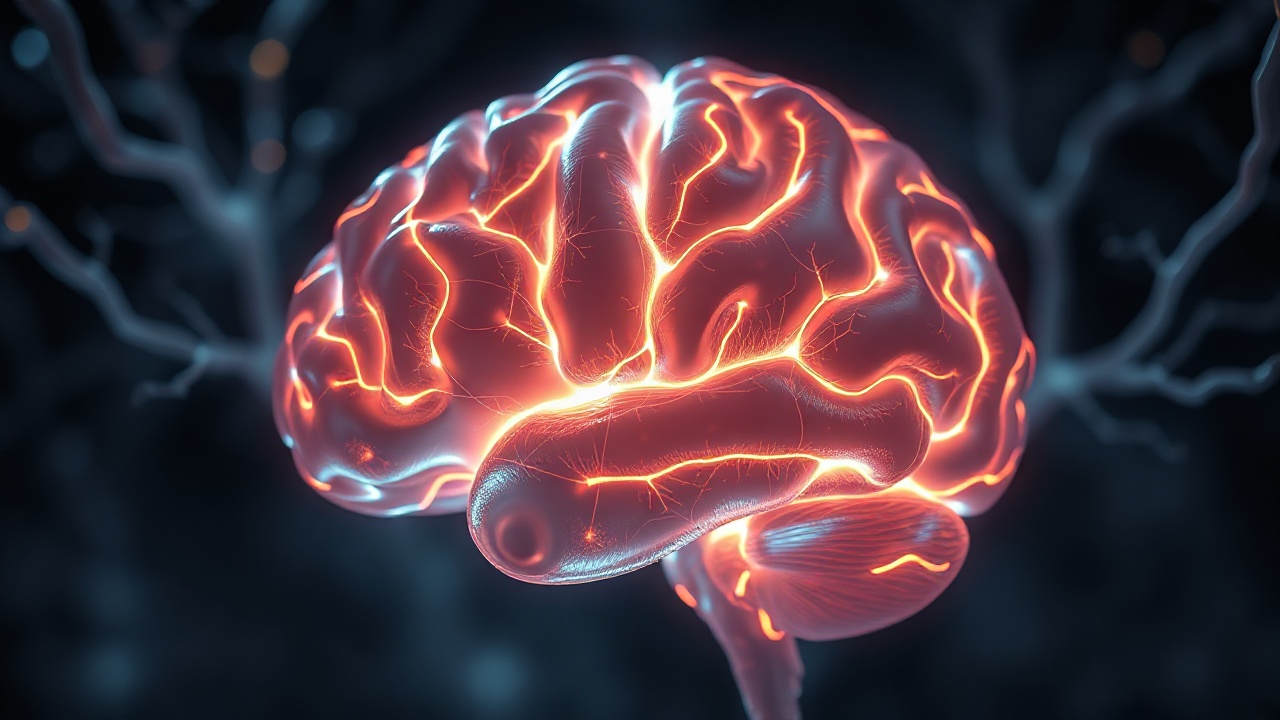
The neural architecture that supported these ancient decisions remains largely unchanged. The ventral striatum, a key part of the brain’s reward circuit, lights up during moments of anticipation. This area doesn’t just care about the reward itself; it cares about the possibility of the reward. The tension between fear and hope is what kept our ancestors alert in a hostile world. Today, that same tension is experienced at a poker table or when investing in a volatile market.
Understanding this history requires looking at the environment of evolutionary adaptedness. In the Pleistocene era, social status and reproductive success were often tied to successful risky ventures. A hunter who successfully brought down a mammoth gained not just meat, but also prestige and mating opportunities. This created a strong selection pressure for traits that favor boldness and innovation, even when the odds of failure were significant.
It is also important to note that risk-taking is not uniform across the species. Genetic diversity ensures that a population has a mix of cautious individuals and daring explorers. This diversity is a collective survival strategy. While the cautious members provide stability, the risk-takers discover new territories and technologies. The balance between these two archetypes has allowed human civilization to expand across every corner of the globe.
Ultimately, our love for risk is a legacy of our success as a species. We are the descendants of those who weren’t afraid to step out of the cave. The adrenaline rush we feel today is a ghost of the survival instinct that once saved our ancestors from extinction. By recognizing these biological roots, we can better understand why the thrill of the unknown remains so intoxicatingly powerful.
The Dopamine Loop and the Reward System
The primary chemical driver behind our attraction to risk is dopamine. Contrary to popular belief, dopamine is not just about the pleasure of winning; it is primarily about the anticipation of a reward. It is the chemical of ‘more,’ driving us to seek out new experiences and potential gains. When we face an uncertain outcome, our brain releases dopamine in waves, creating a state of heightened arousal and focus that many find addictive.
Neuroscientists have discovered that the brain’s response to a near-miss is almost identical to its response to a win. In an evolutionary context, a near-miss during a hunt meant that the strategy was almost correct and that the individual should try again. In the modern world, this translates to the ‘one more try’ mentality. The brain interprets a close loss as a signal to keep going rather than a signal to stop, which is a crucial aspect of the biology of gambling.
The Mechanics of Variable Ratio Reinforcement
One of the most powerful psychological tools in gambling is the variable ratio schedule. This is a system where rewards are given after an unpredictable number of responses. This mirrors the natural world: a predator doesn’t catch prey every time it hunts, but it catches it often enough to survive. This unpredictability creates a much stronger behavioral bond than a predictable reward system does.
- Increased Persistence: Individuals will continue an activity longer if the reward is unpredictable.
- Heightened Excitement: The uncertainty of when the next ‘hit’ will come keeps the brain in a state of high dopamine production.
- Resistance to Extinction: It is much harder to break a habit formed through variable rewards than one formed through consistent ones.
The nucleus accumbens plays a central role here. It functions as the brain’s ‘pleasure center,’ processing the signals of reward and reinforcement. When we take a risk and succeed, a flood of dopamine hits this area, creating a sense of euphoria. Over time, the brain can become desensitized to normal levels of dopamine, requiring higher stakes and bigger risks to achieve the same ‘high’—a process known as tolerance.
Genetic variations also play a significant role in how we process dopamine. Some people have a variant of the DRD4 gene, often called the ‘adventure-seeking gene.’ Individuals with this variant have receptors that are less sensitive to dopamine, meaning they require more intense stimulation to feel a sense of reward. These people are naturally more inclined toward extreme sports, entrepreneurship, and high-stakes gambling.
The Mathematical Instinct vs. Biological Impulse
While we like to think of ourselves as rational beings capable of calculating odds, our biology often works against us. Humans have evolved what psychologists call ‘heuristics’—mental shortcuts that allow for quick decision-making. While these were useful for avoiding tigers, they are often disastrous when dealing with modern probability. We tend to see patterns where none exist, a phenomenon known as apophenia.
One of the most famous cognitive biases is the Gambler’s Fallacy. This is the belief that if an event has happened more frequently than usual in the past, it is less likely to happen in the future (or vice versa). Biologically, our brains are hardwired to look for balance and cycles in nature. If there is a long drought, we expect rain. However, in games of chance, the previous outcome has zero impact on the next one.
| Cognitive Bias | Description | Evolutionary Origin |
|---|---|---|
| Loss Aversion | The pain of losing is twice as powerful as the joy of winning. | Resources were hard to find; losing them could mean death. |
| Availability Heuristic | Overestimating the importance of information that is easy to recall. | Vivid memories of danger helped avoid similar future threats. |
| Overconfidence Effect | Subjective confidence in judgments is greater than objective accuracy. | Confidence was necessary to lead and inspire action in groups. |
Loss aversion is particularly fascinating. Evolutionarily, losing a day’s worth of calories was much more dangerous than gaining an extra day’s worth was beneficial. Therefore, we are biologically programmed to be ‘loss averse.’ However, when we are already in a losing position, our biology shifts. We become ‘risk-seeking in the domain of losses,’ often doubling down on bad bets in a desperate attempt to return to the ‘break-even’ point.
The prefrontal cortex is the part of the brain responsible for executive function and rational thought. It acts as a brake on the more impulsive, risk-taking parts of the brain like the amygdala. The constant tug-of-war between these two regions defines our relationship with risk. Stress, fatigue, and hunger can all weaken the prefrontal cortex, allowing our more primitive, impulsive instincts to take over.
Social Dynamics and Reproductive Risk
Risk-taking is also a social signal. In many cultures and throughout history, taking risks has been a way to demonstrate fitness, courage, and high genetic quality. This is particularly evident in the Handicap Principle, a biological theory which suggests that individuals may take significant risks to show they are so fit they can survive despite the ‘handicap’ of the risk itself.
From an evolutionary biology perspective, young males are often the most prone to risk-taking. This is often referred to as ‘young male syndrome.’ During the period of life when competition for mates and status is at its peak, the biological drive to stand out through daring acts is most intense. High levels of testosterone are closely linked to a decreased perception of risk and an increased drive for dominance.
However, risk is not exclusively a male trait. Female risk-taking often manifests differently, focusing on social capital, resource security, and the protection of offspring. While men might take ‘heroic’ or physical risks, women throughout history have taken significant risks in the realms of social maneuvering and resource management. Both forms of risk are essential for the survival and propagation of the lineage.
Status also plays a role in how risk is perceived by the community. A high-status individual who takes a risk and fails may be forgiven or even admired for their boldness, whereas a low-status individual might be punished. This social feedback loop reinforces risk-taking as a tool for upward mobility. In modern times, this is seen in the high social value placed on ‘disruptive’ entrepreneurs who risk everything on a new idea.
The Sensation Seeking Scale

Not all risk is the same. Psychologists categorize risk-takers into different profiles, often using the Sensation Seeking Scale developed by Marvin Zuckerman. This scale measures four distinct components of the desire for risk and novelty. Understanding where an individual falls on this scale can explain why one person loves skydiving while another prefers high-stakes day trading.
- Thrill and Adventure Seeking: A desire for physical activities that involve speed, danger, or defying gravity.
- Experience Seeking: A hunger for new sensory experiences through travel, art, or unconventional lifestyles.
- Disinhibition: The search for release through social activities, parties, and the breaking of social norms.
- Boredom Susceptibility: A low tolerance for repetitive tasks or predictable environments.
These traits have a high degree of heritability, suggesting they are deeply rooted in our biology. High sensation seekers have lower levels of monoamine oxidase (MAO), an enzyme that breaks down neurotransmitters like dopamine. This means their brains are constantly ‘primed’ for more stimulation, making ordinary life feel dull and unrewarding.
This biological makeup isn’t a defect; it’s a specialty. High sensation seekers are often the first to explore new frontiers or try new foods, which would have been vital for a tribe’s expansion. They are the ‘scouts’ of the human species. In the modern world, these individuals often find success in high-pressure environments like emergency medicine, firefighting, or speculative finance, where their comfort with uncertainty is a competitive advantage.
Stress, Cortisol, and the ‘Arousal’ of Risk
Risk-taking is inextricably linked to the body’s stress response. When we face a risky situation, the HPA axis (hypothalamic-pituitary-adrenal axis) is activated, leading to the release of cortisol and adrenaline. This ‘fight or flight’ response prepares the body for action, increasing heart rate and sharpening the senses. For some, this state of arousal is perceived as unpleasant, but for the ‘adrenaline junkie,’ it is deeply invigorating.
The relationship between stress and risk is complex. Chronic stress can actually lead to more impulsive and risky decision-making. When cortisol levels are elevated for long periods, the brain shifts its focus from long-term planning to immediate survival. This is why people in high-stress environments or poverty may engage in what seems like ‘irrational’ gambling; their biology is prioritizing the possibility of an immediate ‘fix’ over long-term stability.
The Hormonal Cocktail of the ‘Zone’
Professional gamblers and extreme athletes often describe a state of ‘flow’ or being in the ‘zone.’ This is a precise biological state where the cocktail of neurochemicals reaches a perfect balance. It is a high-performance state characterized by intense focus and a loss of the sense of time. This state is highly addictive because it represents the peak of human neurological functioning.
| Chemical | Role in Risk-Taking | Effect on Behavior |
|---|---|---|
| Adrenaline | Physical arousal | Increased energy and reaction speed. |
| Cortisol | Stress modulation | Focused attention on the immediate threat or goal. |
| Endorphins | Pain suppression | The ‘runner’s high’ and resilience during physical risk. |
| Serotonin | Mood regulation | Influences the level of confidence in a risky decision. |
Interestingly, the environment can trigger these hormonal releases even without physical danger. The bright lights, rhythmic sounds, and tactile feedback of a casino are designed to trigger a minor stress response, keeping the player in a state of high arousal. This ‘simulated risk’ leverages our biological hardware to keep us engaged in an artificial environment.
Modern Substitutes for Ancient Dangers

In our safe, sanitized modern world, the biological drive for risk has few natural outlets. We no longer have to hunt for our food or defend our territory from predators. This creates a ‘risk vacuum.’ When our biological need for uncertainty and challenge is not met, we often seek out artificial substitutes. This is the foundation of the modern gambling industry, the popularity of extreme sports, and even the volatility of digital assets.
The problem arises when these artificial risks do not provide the same feedback loop as natural risks. In nature, a risk is usually followed by a resolution—you either get the food or you don’t. In modern gambling, the ‘near-miss’ and the rapid-fire nature of the games mean the resolution is constantly deferred, keeping the player in a state of perpetual biological tension. This can lead to a ‘maladaptive’ expression of the risk-taking instinct.
To manage this drive, it is helpful to find healthy outlets that satisfy the brain’s need for novelty and challenge. Competitive sports, learning complex new skills, or even strategic board games can provide the necessary ‘dopamine hits’ without the devastating consequences of high-stakes financial risk. Recognizing that the urge to gamble is actually a displaced survival instinct can help individuals regain control over their impulses.
We can also look at ‘intellectual risk’ as a modern evolution of the trait. Challenging one’s own beliefs, engaging in public speaking, or starting a new creative project all involve a degree of social and psychological risk. These activities trigger many of the same neurological pathways as physical risk but often lead to personal growth and societal contribution rather than resource depletion.
The Future of Risk: Technology and Biology
As we move further into the digital age, our biology is being tested in new ways. High-frequency trading, gamified investment apps, and virtual reality simulations are all designed to tap into our ancient reward systems with unprecedented precision. The speed of these systems is much faster than the human brain’s ability to process them rationally, leading to a ‘hijacking’ of our evolutionary biology.
However, we are also gaining the tools to understand and manage our instincts. Biofeedback and neuroimaging are allowing us to see our brain’s response to risk in real-time. By understanding our personal ‘risk profile’ and the triggers that lead to impulsive behavior, we can design environments and habits that work with our biology rather than against it. The goal is not to eliminate risk—which would be contrary to our nature—but to harness it.
In the future, we may see the development of ‘risk education’ that focuses on the biological and psychological aspects of decision-making. Teaching people how to identify the physical signs of a ‘dopamine rush’ or a ‘loss-aversion’ panic could be as fundamental as teaching basic mathematics. By bridging the gap between our primitive instincts and our modern environment, we can navigate the uncertainties of the future with the same courage and wisdom that allowed our ancestors to survive and thrive.
Ultimately, our love for risk is a testament to the human spirit’s refusal to be satisfied with the status quo. It is the engine of progress, the spark of creativity, and the essence of what it means to be alive. Whether we are placing a bet, launching a rocket, or falling in love, we are participating in an ancient biological dance that has defined our species for millions of years. Embracing risk, while understanding its biological cost, is the key to a full and vibrant life.