Blackjack Party
Most live dealer tables feel like a bank branch with better lighting. Quiet dealers, quiet players, quiet money leaving your balance. Blackjack Party takes that whole mood and throws it out the window. There is music playing, two presenters instead of one, jokes flying at the camera, and a chat box that never really goes silent. And underneath all the noise sits a completely standard eight-deck game with one of the best return rates in the entire live casino lobby.
That contrast is the whole point of the table. Evolution built it for people who want company while they play, not just a card count and a payout. Stakes start low on purpose. Seats are limited to seven, but thousands of people can still get money on the felt through Bet Behind. The result is a table that plays like a house party where somebody happens to be dealing cards in the corner.
What follows breaks the game down properly: rules, RTP, side bet maths, the Bet Behind system, the interface, and where this table makes sense in a session plan — including how the party pace quietly changes the way people bet.

Release Date
2013

Provider
Evolution

Game Type
Live

RTP
99.29%

| Feature | Detail |
| 🎬 Release year | 2013, with several studio and interface refreshes since |
| 🏢 Provider | Evolution |
| 🎥 Game type | Live dealer blackjack, streamed from a real studio table |
| 🎉 Concept | Low-stakes, party-format seven-seat blackjack with two presenters |
| 🃏 Decks in play | 8, dealt from a shoe |
| 💺 Seats | 7 |
| 👥 Bet Behind | Yes, effectively unlimited spots |
| 🧑🤝🧑 On camera | Dealer plus co-presenter or hostess |
| 🎯 RTP (main game, correct strategy) | 99.29% |
| 🏠 House edge | Roughly 0.71% |
| 🎲 Volatility | Low to medium on the main hand, high on side bets |
| 💵 Min bet | Deliberately low, often from around €/$1 |
| 💰 Max bet | Commonly up to €/$5,000 per box, set by the operator |
| 🏆 Main hand top payout | 3:2 for a natural blackjack |
| 🚀 Biggest side bet payout | 100:1 for suited trips on 21+3 |
| ♦️ Side bets available | Perfect Pairs, 21+3 |
| 🛡️ Insurance | Offered at 2:1 when the dealer shows an Ace |
| 🔁 Dealer rule | Stands on all 17s, including soft 17 |
| 2️⃣ Double down | Allowed on hard 9, 10 and 11 |
| ✂️ Splitting | One split per hand, equal value cards |
| ♠️ Split Aces | One card each, no re-hit |
| 📱 Devices | Desktop, iOS, Android, tablets |
| 💬 Live chat | Yes, presenters answer regularly |
| 📊 Statistics | Hand history and personal stats available in game |
| 🎧 Audio | Party playlist plus live presenter commentary |
| 🧪 Demo mode | Free play demo on Evolution’s own game site |
Play the demo Blackjack Party for free
List of the best casinos for playing Blackjack Party
 | Bet365 | Claim a 100% deposit match up to $1000 and qualify for up to 1000 free spins. | 9.62 | ; |
 | 1WIN | Get a 500% bonus on your first four deposits up to $1025 total. Download the app for an additional $100 sports betting bonus. | 9.54 | ; |
 | BetWinner | Use a promo code for a 100% bonus up to $1630 and 150 free spins. | 9.43 | ; |
 | Mostbet | Get a 125% first deposit bonus up to $400 and 250 free spins. | 9.31 | ; |
 | 888 Casino | Get 88 free spins with no deposit required, followed by a 100% match up to $520. | 9.26 | ; |
 | Brazino777 | Claim a 225% welcome package up to $5000 over three deposits. High rollers can access a special 200% match up to $30000. | 9.18 | ; |
 | Bwin | Provides a 100% deposit match up to $108 and a $25 risk-free "Backup Bet" for sports. | 9.04 | ; |

| Pin-up | Receive a 120% first deposit bonus up to $500 plus 250 free spins | 8.92 | ; |
 | 1xBet | New users get a 300% welcome bonus up to $600 split between sports and games. | 8.76 | ; |

| RedKings | Receive a 100% match up to $100 plus 15 free spins on your first deposit. | 8.49 | ; |
 | Pinco | Claim a 150% first deposit bonus up to $3650 and 250 free spins with a standard 50x wagering requirement | 8.32 | ; |

| Melbet | Claim up to $1750 and 290 free spins over five deposits with a minimum deposit of $11. | 8.21 | ; |
Blackjack Party Overview
Evolution rolled the table out in 2013, back when live casino streams were still fighting to look like anything other than a webcam pointed at a felt. The studio design was a deliberate break from the dark, wood-panelled look everyone else was using. Bright colours, big lights, a background that looks closer to a lounge bar than a Monte Carlo salon. Since then the set has been rebuilt more than once and the stream quality has moved on from grainy to genuinely sharp, but the concept never changed: fun first, formality never.
The soundtrack is the thing people notice in the first ten seconds. There is an actual playlist running underneath the game, upbeat and a little cheesy, and it does not stop while cards are dealt. On top of it, the dealer and a co-presenter keep talking. One deals, the other one plays host, reads the chat, celebrates wins, sympathises with bad beats and generally keeps the energy up. Both are TV trained, which shows the moment somebody at seat four splits eights against a ten and needs a nudge in the right direction. Table talk stays friendly rather than instructional, but the guidance is there when a newer player looks lost.
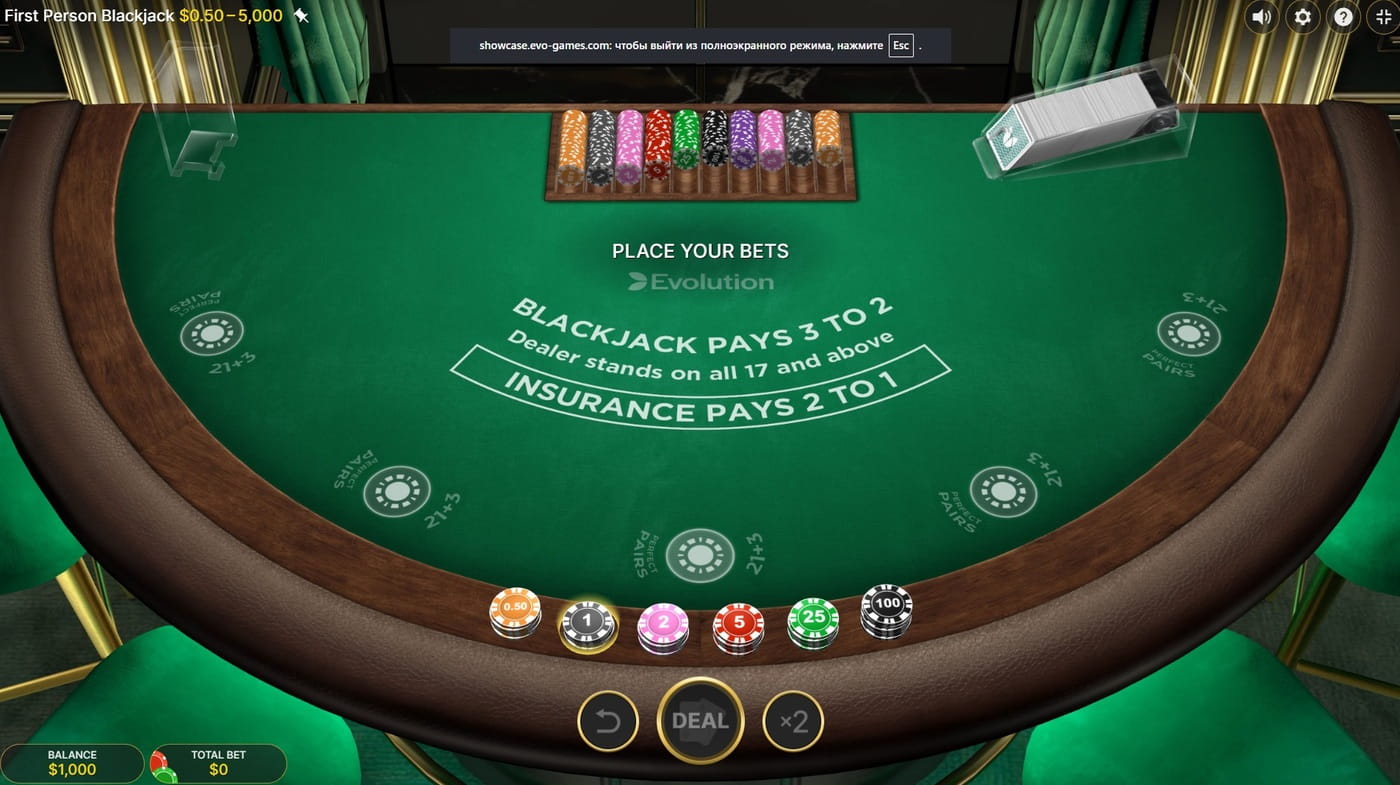
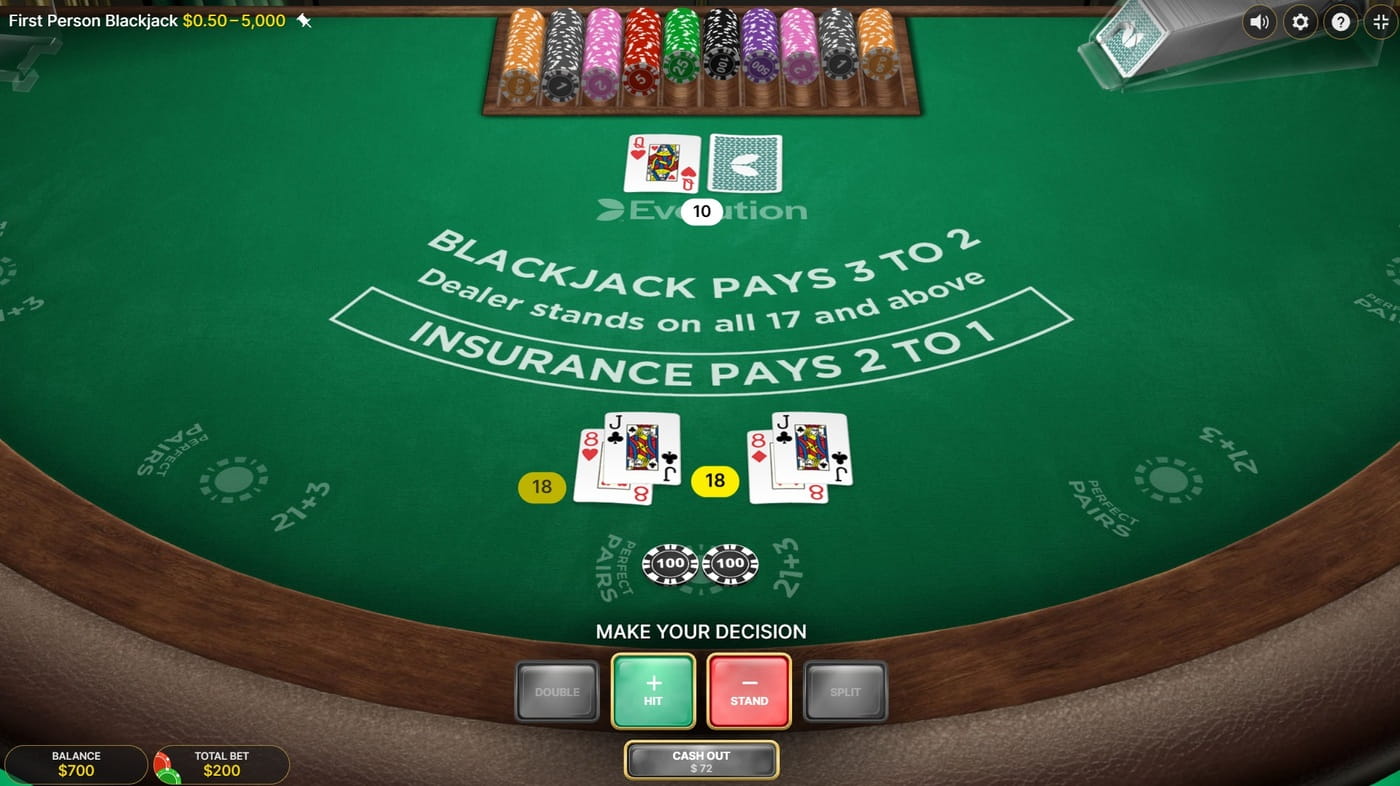
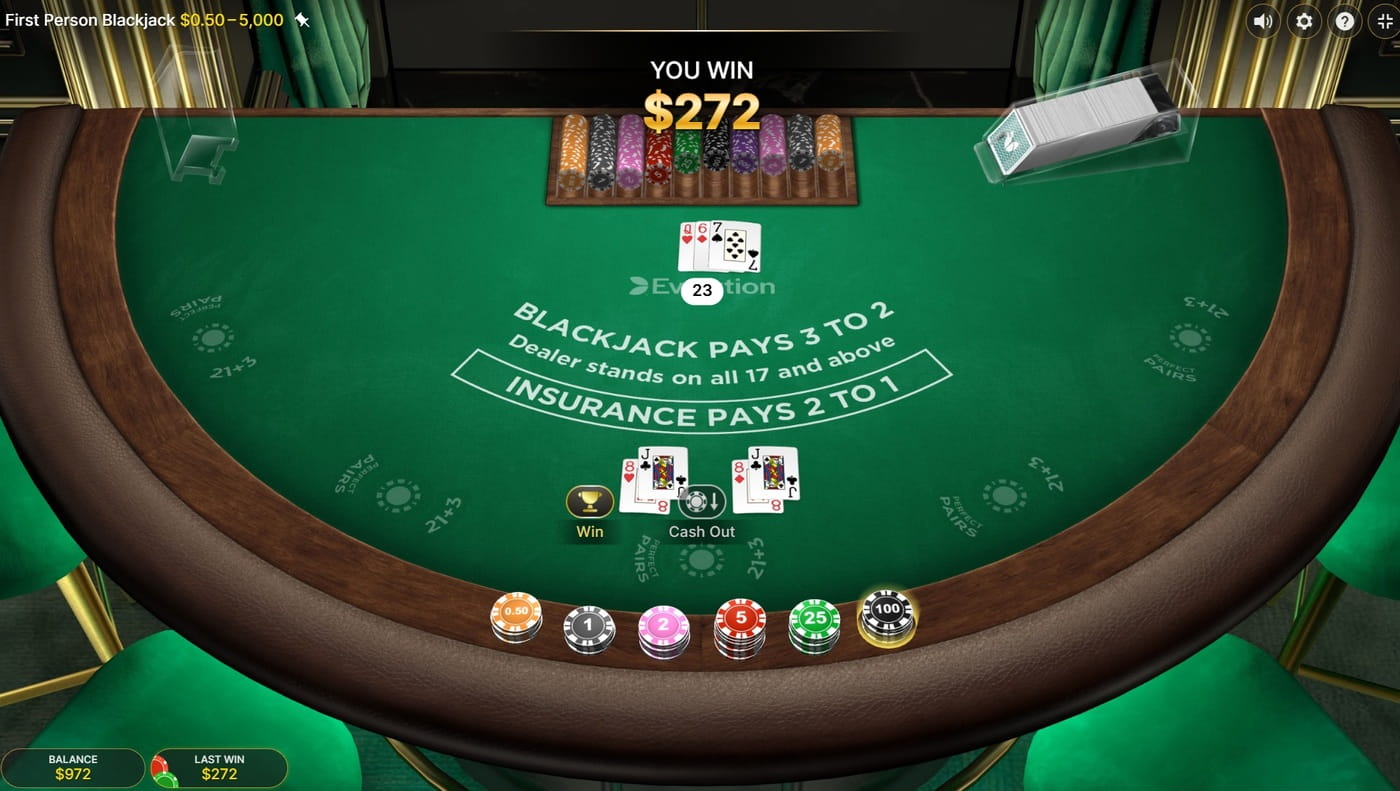
Visually the table stays clean despite all the colour. Cards are large, chip denominations run along the bottom of the screen and betting boxes light up when the round opens. Camera work switches between a wide studio shot and a tight overhead of the cards, so nothing gets lost behind a sleeve. It streams in HD, drops resolution gracefully on weak mobile connections, and never buries the action under decorative junk. Loud in personality, quiet in interface design — a harder balance to hit than it looks.
Blackjack Party RTP
RTP stands for return to player, and it is simply the share of all money wagered that a game gives back over a very long stretch of play. It is a long-run average, not a promise about tonight. Blackjack Party runs at 99.29% on the main hand when a player follows correct basic strategy, which leaves the house with an edge of about 0.71%. In plain numbers, every €100 pushed across the felt returns roughly €99.29 in the theoretical long run. That is one of the strongest returns available anywhere in a live casino, far ahead of most roulette wheels and most game shows.
The important word in that sentence is strategy. Blackjack is one of the few casino games where player decisions move the number. Hit a hard 16 against a dealer six, take insurance out of habit, refuse to split a pair of eights, and the effective return drops well below 99%. Sloppy play can push the house edge past 2% without much effort, which quietly costs more than any side bet ever will. The 99.29% figure is what the game gives back to somebody who knows when to stand.
Volatility on the base game sits in low-to-medium territory. Hands resolve as wins, losses or pushes with a fairly predictable rhythm, and a bankroll grinds up and down rather than exploding in either direction. That changes the moment side bets enter the picture. Perfect Pairs returns around 95.90% and 21+3 around 96.30%, both with much higher variance, because most rounds pay nothing and the good ones pay big. Mixing side bets into every hand pulls the blended return of a session down noticeably, even though the main game itself stays generous.
Blackjack Party Max Win
There is no five-figure multiplier hiding at this table, and pretending otherwise would be dishonest. The main hand pays even money on a straight win, 3:2 on a natural blackjack, and 2:1 on insurance when the dealer turns over a ten. Double down and split correctly and a single round can still return several times the original stake, but blackjack has always been a game of small edges repeated many times rather than one lottery ticket.
The big numbers live in the side bets. 21+3 tops out at 100:1 for suited three of a kind, which turns a €10 side bet into €1,000 on the spot. A straight flush pays 40:1, three of a kind 30:1. Perfect Pairs peaks at 25:1 for a perfect pair, meaning two identical cards of the same suit and rank. Stack a decent main bet, a maxed side bet and a lucky shoe, and a single deal can produce the kind of screenshot people post in group chats for a week.
Bet Behind changes the shape of this, because it multiplies exposure rather than payout. Anyone riding behind a seated hand wins on exactly the same terms as the person in the chair and can attach side bets too, with no cap on how many people back the same streak. The realistic ceiling for a session comes from table limits plus a well-timed run of doubles and splits, not from one jackpot event.

Table Rules Worth Knowing Before Sitting Down
Eight decks, dealer stands on all seventeens, and no surrender. Doubling is restricted to hard totals of nine, ten and eleven, which is stricter than some land-based rules and matters for strategy. Splits are limited to one per hand, and split Aces receive a single card each with no further hits. A ten dealt to a split Ace counts as twenty-one, not as a blackjack, so it pays even money.
Insurance appears whenever the dealer shows an Ace, and the game peeks before play continues. Long-run maths says insurance loses money without card counting, and counting is not viable against a regularly shuffled eight-deck shoe. The button is there. Pressing it is optional and, for most players, unnecessary.
Gameplay and Interface
A round starts with a countdown timer, usually somewhere around fifteen seconds. Chips sit at the bottom of the screen, seven boxes wait on the felt, and clicking a box drops a chip on it. Side bet circles sit just outside the main box, so Perfect Pairs and 21+3 are one tap away. Once betting closes, the dealer burns through the deal quickly, two cards to each active box and one face-up card to the house, and then works around the table seat by seat while the co-presenter narrates.
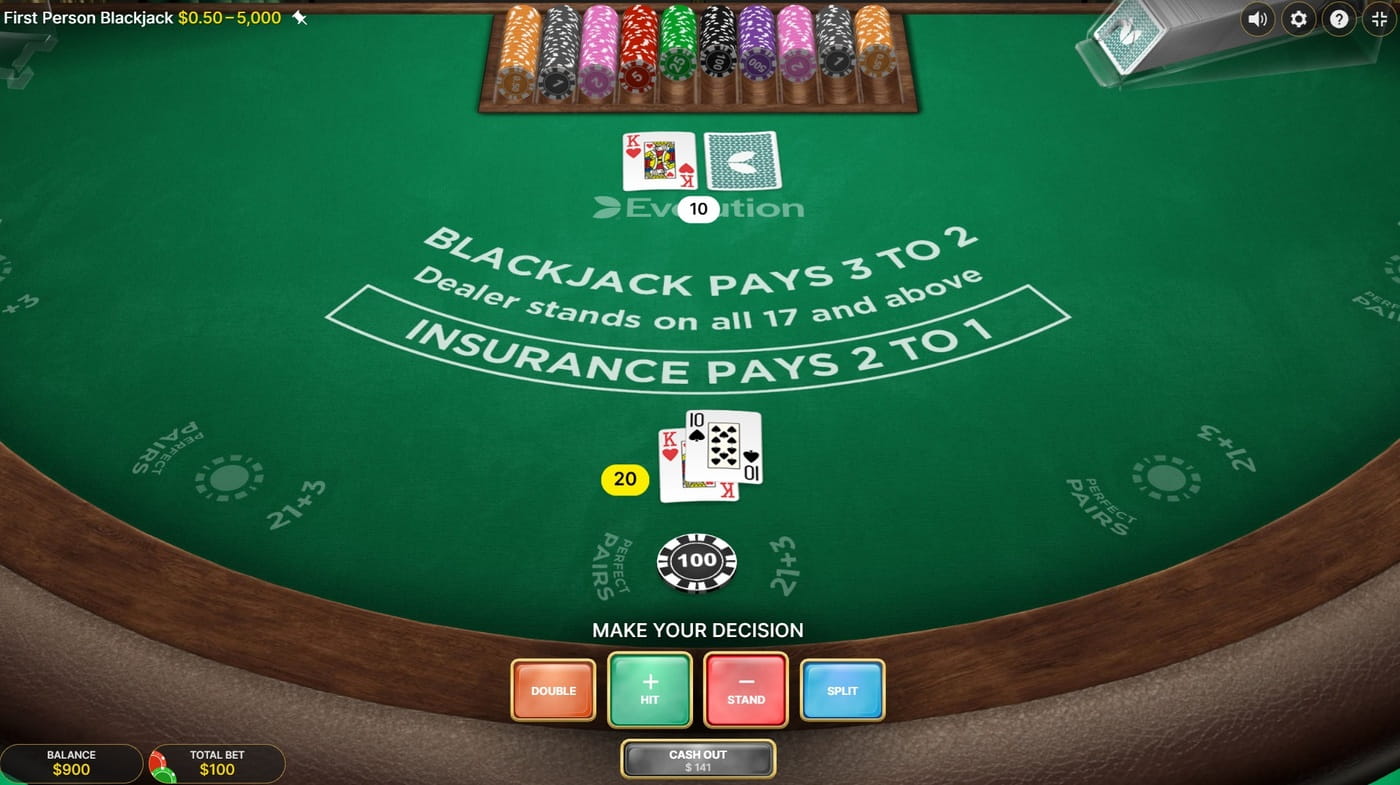
Decision time per seat is short, deliberately. Hit, Stand, Double and Split buttons appear when the turn arrives, along with a small timer bar. Miss the window and the game stands on the hand automatically, which is the reason experienced players keep a strategy chart open in another tab rather than trying to think it through from scratch. There is no auto-play in the classic sense, but there is a repeat bet button and a double-bet button, and both are the quickest way to keep a stake pattern consistent across a shoe.
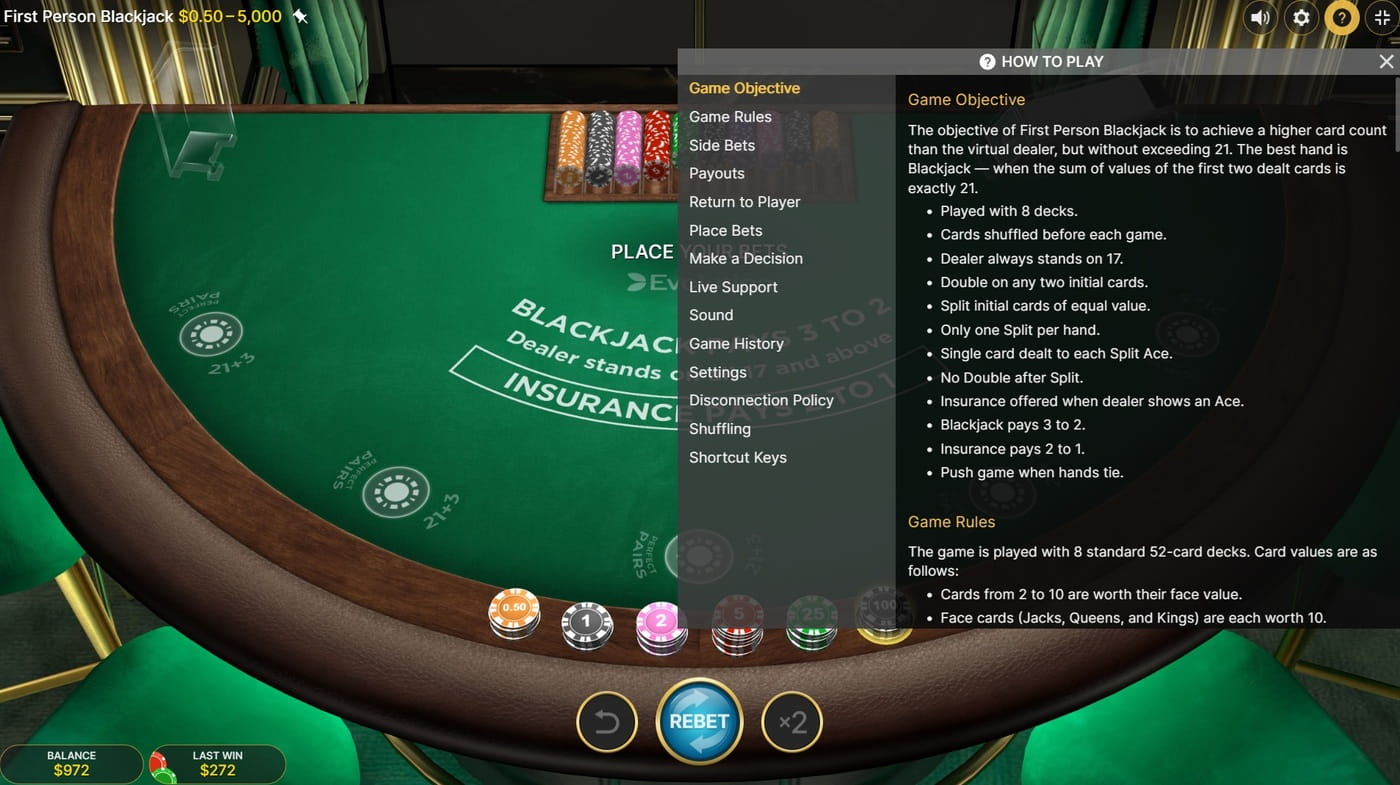
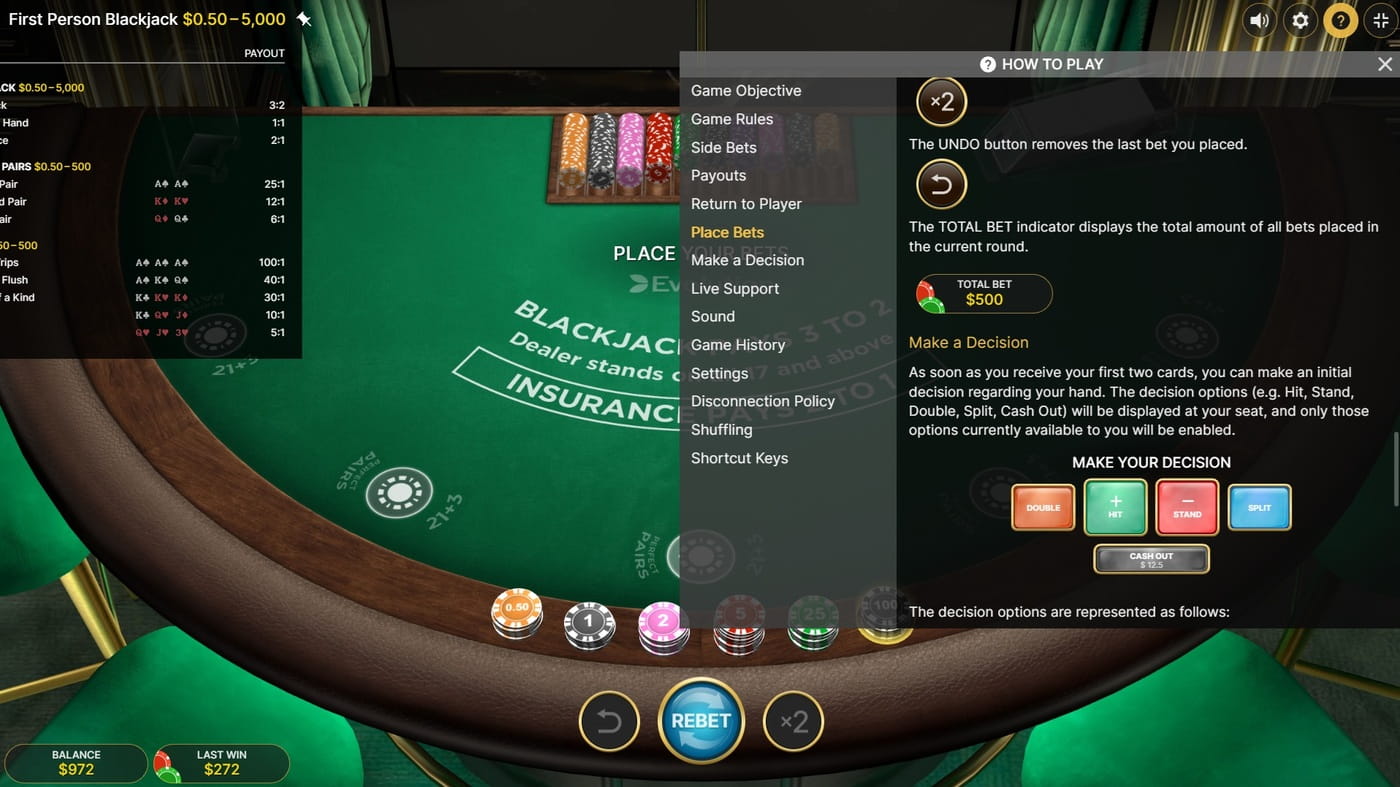
The interface layer around the video is where Evolution’s engineering shows. Hand history sits in a panel that lists every result, so checking what happened three rounds ago takes a click. Personal statistics track wins, losses and natural frequency. Chat is a proper two-way channel rather than decoration; the co-presenter reads it out, answers questions and welcomes new names, which makes the table feel like a room instead of a stream. Video quality can be dialled down for weak connections, and the mobile build reflows into a vertical layout that stays usable one-handed.

Interface features that actually get used:
- Bet Behind panel — pick any occupied seat and back it without waiting for a chair to free up
- Repeat and double — rebuild the previous stake in one tap when the timer is tight
- Live chat with presenters — questions get answered on camera, not by a bot
- Hand history — every completed round stored and reviewable mid-session
- Personal statistics — running record of results and blackjack frequency
- Video quality selector — drop the stream down when the connection wobbles
- Sound split — music, dealer voice and game effects can be balanced separately
Recognition and Reputation
Blackjack Party has never been a headline award winner in its own right, and any review claiming it collected a shelf full of trophies is inventing things. What it has is something more useful: it belongs to a Live Casino portfolio that has been named the industry’s best more times than anyone can comfortably count. Evolution has taken Live Casino Supplier of the Year at the EGR B2B Awards year after year, has repeatedly won at the Global Gaming Awards, and has been recognised across the SBC and International Gaming Awards circuit for the same live studio operation that runs this table.
That matters because those trophies are handed out for exactly the things this game depends on: stream stability, studio production, presenter training and game integrity. Dealers go through a dedicated training school, tables are audited, and shoes are handled under camera coverage with no blind spots. An operator adding this table to its lobby inherits that entire production stack.
Player reputation is a separate scoreboard, and here the table does very well. It regularly turns up in community rankings as the friendliest live table for beginners, and it stays one of the busiest blackjack streams in the Evolution lobby at almost any hour. Serious grinders sometimes dismiss the music as a distraction. Almost nobody argues about whether the game itself is well run.
Cards, Hand Values and Payouts
There are no reels here and no wild symbols. The paytable is the cards themselves, and it is refreshingly short. Number cards count their face value, all face cards count as ten, and an Ace counts as either one or eleven, whichever helps the hand. A hand of Ace plus any ten-value card dealt as the first two cards is a natural blackjack, which is the best result available and the only one paying more than even money on the main bet.
Hands beat the dealer by landing closer to twenty-one without going over. Bust and the stake is gone immediately, even if the dealer busts afterwards — the single rule that costs casual players the most money over time. A tie is a push and the stake comes back. The dealer plays a fixed pattern with no decisions: draw to sixteen, stand on seventeen and above, including soft seventeen. That last detail is player-friendly and part of why the return sits so high.
Main Game Payouts
| Result | Pays |
| Natural blackjack (Ace + 10-value card) | 3:2 |
| Winning hand against the dealer | 1:1 |
| Insurance (dealer shows Ace, has blackjack) | 2:1 |
| Push (equal totals) | Stake returned |
| Dealer busts, player still standing | 1:1 |
| Player busts | Stake lost immediately |
| Twenty-one on a split Ace | 1:1, not 3:2 |
There is no symbol substitution and no scatter triggering free rounds, because none of that exists in blackjack. The closest thing to a bonus trigger is the combination landing in the first three cards on the table, handled entirely through the two optional side bets below. Every main hand settles on its own, round by round, with nothing carrying over between deals.

Blackjack Party Bonus Features
Perfect Pairs
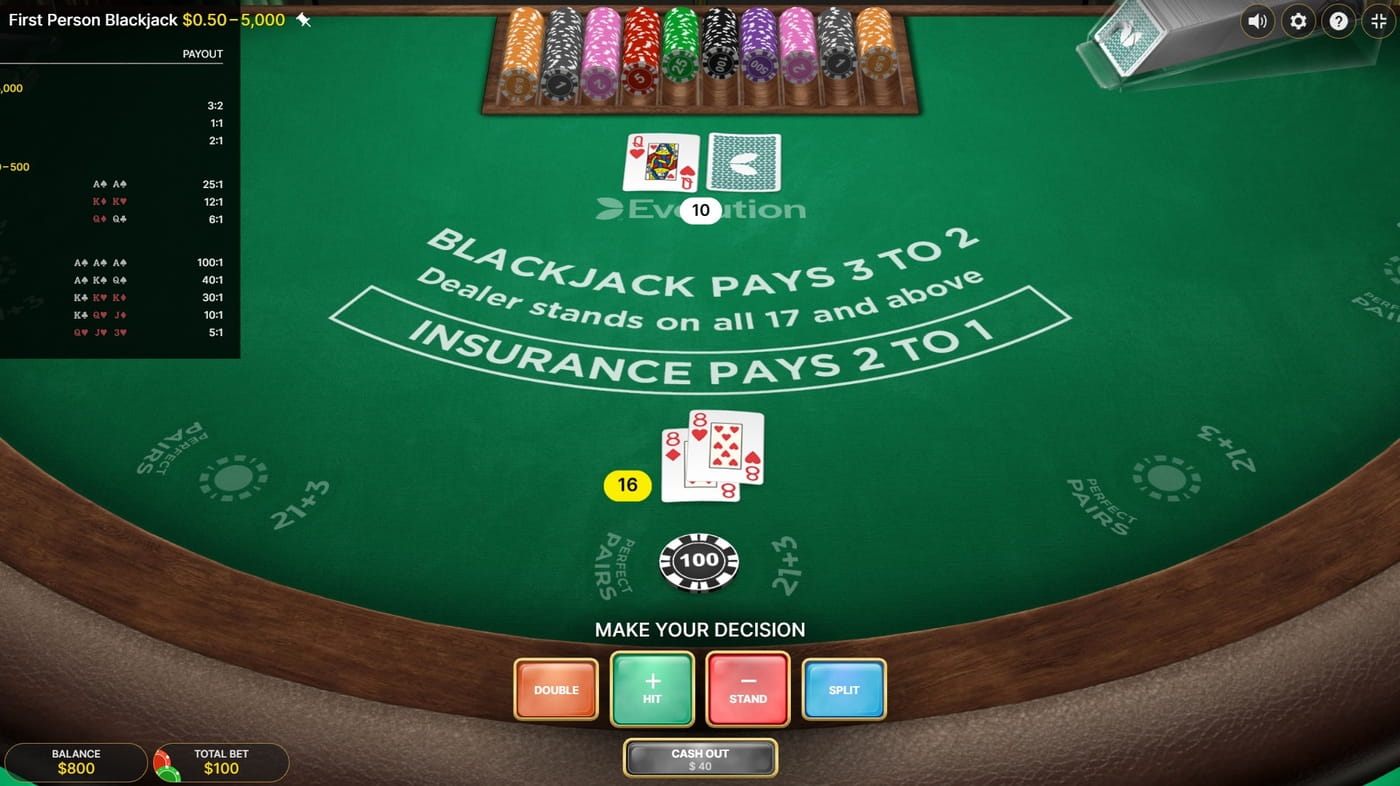
Perfect Pairs is a bet on the first two cards dealt to a specific box forming a pair. It does not care what happens afterwards; the main hand can bust on the next card and the side bet still pays. Three tiers exist, and the payout depends on how well matched the pair is.
| Pair type | Example | Pays |
| Perfect pair (same suit and rank) | ♥8 + ♥8 | 25:1 |
| Coloured pair (same colour, different suit) | ♦Q + ♥Q | 12:1 |
| Mixed pair (different colours) | ♠5 + ♦5 | 6:1 |
The theoretical return on this bet sits at roughly 95.90%, which is well below the main game. It is a variance bet, plain and simple. Players who chase it every round for the same stake as their main bet will feel the drag over a long session, but a small unit placed occasionally adds a jolt of unpredictability without wrecking the bankroll.

21+3
21+3 combines the player’s first two cards with the dealer’s face-up card and pays out on standard three-card poker hands. It is the higher-ceiling side bet of the two and the source of the table’s biggest multipliers.
| Three-card hand | Pays |
| Suited three of a kind | 100:1 |
| Straight flush | 40:1 |
| Three of a kind | 30:1 |
| Straight | 10:1 |
| Flush | 5:1 |
Return sits around 96.30%, slightly better than Perfect Pairs but still a long way short of the base game. Flushes come along often enough to keep the bet alive, and the 100:1 top hand is rare enough that hitting it turns into a story. Anyone betting side bets should treat them as an entertainment cost baked into the session budget rather than as a route to profit.
Bet Behind
This is the feature that defines the table. Seven chairs fill quickly, and normally that would mean waiting. Instead, any player can place a bet behind any seated player’s box, and there is no meaningful limit on how many people can back the same hand. The backer wins or loses exactly as the seated player does, including on doubles and splits, and can attach Perfect Pairs and 21+3 to the hand as well.
The catch is control, or the lack of it. The person in the seat makes every decision. Back a player who hits on hard seventeen and there is nothing to do but watch. Evolution added a sensible safety valve: an option to skip the next round automatically if the seated player leaves the table, so a stake never carries over to a stranger who takes the empty chair.
Seated players can also Bet Behind other boxes at the same table, which turns a single round into several simultaneous positions. It is a genuinely clever solution to the seat shortage problem, and it is the main reason this table can carry thousands of concurrent players without ever feeling empty or overloaded.
Is Blackjack Party Legal?
Yes, wherever online casino play itself is legal. The game is produced by Evolution, one of the most heavily regulated suppliers in the industry, and it is only distributed through licensed operators. Evolution holds a Malta Gaming Authority B2B licence, is licensed and regulated in Great Britain by the Gambling Commission, and carries approvals across a long list of additional jurisdictions including several regulated US states, Canadian provinces, and markets across Europe, Latin America and Asia.
Fairness is not a matter of trust here, it is a matter of audit. Physical cards, physical shoes and human dealers are all recorded under multiple cameras, and Optical Camera Recognition converts every card into digital data the moment it leaves the shoe. Game outcomes, shuffle procedures and dealer conduct are reviewed by independent testing houses. eCOGRA and similar bodies certify the return figures that appear in the game rules, which is why the 99.29% number can be quoted with confidence rather than as marketing copy.
For a player, the practical checklist is short. The table itself is legitimate everywhere it appears legitimately. The thing worth checking is the casino hosting it: licence number in the footer, regulator logo that links somewhere real, clear withdrawal terms, and access to responsible gambling tools like deposit limits and self-exclusion. If the operator is licensed in a jurisdiction that covers the player’s location, the game running inside it is exactly as regulated as it looks. If the operator is not, the problem was never the blackjack table.
How to Play: Tips and Practical Tricks
Start with basic strategy, because nothing else here matters as much. There is a mathematically correct move for every combination of player hand and dealer up-card, and it was solved decades ago. Learning it is not a talent, it is a chart. Keep it open on a second screen for the first few sessions and the moves turn into reflex faster than expected. Every deviation hands a little more edge to the house, and the timer here is short enough that guessing under pressure gets expensive.
Set the stake before the first hand, not during a bad run. The low minimums exist so a modest bankroll survives normal variance, and that only works if the unit size stays sane. A base stake worth no more than 1–2% of the session bankroll leaves room for the doubles and splits basic strategy demands. Nothing sinks a session faster than being unable to afford a double on eleven because the last three hands were oversized.
The party atmosphere is a feature and a trap at the same time. Music and cheering pull people into faster, looser decisions, and the presenters are paid to keep the energy high, not to protect anyone’s bankroll. Play the maths, enjoy the noise, and keep the two separate.

Seven things that quietly improve results:
- Skip insurance. It loses money over time in an eight-deck shoe. The only exception is a hand where taking even money on a natural blackjack genuinely fits the risk plan.
- Always split Aces and eights, never split tens or fives. Two of the strongest and two of the worst splits in the game, and both get broken constantly by people playing on instinct.
- Double on eleven against anything but an Ace. The rules here allow doubling on nine, ten and eleven, so use the permission when the chart says so.
- Use Bet Behind selectively. Watch a seat for a few rounds before backing it. Betting behind somebody who hits soft eighteen against a six is paying for their mistakes.
- Turn the music down, not off. Keeping the presenter audio while lowering the playlist keeps the table social without letting the tempo drive the pace of betting.
- Use the repeat bet button. It keeps the stake pattern flat and removes the fumbling that leads to accidental over-betting near the end of a countdown.
- Treat side bets as a fixed entertainment budget. Decide how many units go to Perfect Pairs and 21+3 before sitting down, and stop when they are gone.
About the Developer
Evolution began in 2006 as a small operation with a straightforward bet: that live-streamed dealers would eventually beat animated ones. At the time, that was not obvious. Broadband was patchy, streaming was expensive, and most operators saw live casino as an expensive novelty. The company built its first studio in Riga anyway, and spent years grinding out the unglamorous work of camera rigs, card recognition software and dealer training programmes while the rest of the industry chased slot titles.
By the early 2010s the bet had paid off, and the company started pushing into formats rather than just replicating land-based tables on camera. Blackjack Party came out of that phase, in 2013. The reasoning behind it was blunt and correct: live blackjack was growing, but seat scarcity was strangling it. Seven chairs cannot serve thousands of players, and traditional blackjack streams were quiet, serious and slightly intimidating for newcomers. The answer combined two ideas — make the table feel like a night out by adding a second presenter and a soundtrack, and solve the capacity problem by letting unlimited players bet behind the seated ones. Both ideas later spread across the wider portfolio.
The company has since grown into the dominant force in live casino, with studios across Europe, North America, Latin America and Asia and a stable that now includes NetEnt, Red Tiger, Big Time Gaming, Nolimit City and Ezugi. It still runs this table, more than a decade on, largely unchanged in concept. That longevity says more than any spec sheet. Gimmicks disappear in eighteen months. Formats that solve a real problem stay in the lobby.
Party Pace: How the Format Changes Betting Behaviour
Here is the part most reviews skip. The music, the chatter and the countdown clock are not neutral decoration. They set a tempo, and tempo controls how many decisions a player makes per hour, which in turn controls how much money passes through the house edge. A 0.71% edge sounds tiny until it is multiplied by hundreds of hands. Total risk in a session is a function of stake size times hands played, and this table is designed to keep hands moving.
Seven boxes and a shared dealer mean rounds are slower here than at a solo table, which is actually protective. A private one-on-one blackjack stream can push through far more decisions in the same hour. The party format spreads the same clock across more people, so a session at this table produces fewer hands than the raw energy level suggests. The perceived speed comes from the noise, not the deal rate.
| Table style | Rough hands per hour | Practical effect |
| Party format with 7 seats full | Lower | More waiting, more chat, less money through the edge |
| Standard live blackjack, few players | Higher | Faster decisions, faster bankroll movement |
| Infinite-seat blackjack | Highest | No waiting at all, quickest exposure to variance |
| Bet Behind only, no seat | Same as table | Zero decision pressure, all outcomes decided by someone else |
The behavioural risk sits elsewhere. Upbeat music and a co-host celebrating other people’s wins nudge players toward bigger stakes and side bets, because those produce the loud moments. Nobody in chat celebrates a flat even-money win on twelve. They celebrate a 100:1 suited trips hit. Awareness of that pull is most of the defence against it: set the unit size before the music starts.
The Bet Behind Question: Backing Somebody Else’s Judgement
Bet Behind looks like a convenience feature and behaves like a strategic decision. The mathematics are simple enough — the backer’s return is identical to the seated player’s return on that hand — but that identical return is only worth 99.29% if the person in the chair plays correct basic strategy. They often do not. Backing a player who stands on hard twelve against a dealer three, or who splits tens because a pair of face cards looks pretty, transfers their mistakes directly onto the backer’s stake.
Reading a seat takes a few rounds and no special skill. Does the player double on eleven, split eights, refuse insurance? A seat that behaves predictably and correctly is worth backing. A seat that plays by mood is a coin flip with extra steps, however hot the streak looks — and streaks carry no predictive information whatsoever, which bears repeating, because Bet Behind is the feature most likely to make people forget it.
Signals worth checking before backing a seat:
- The player consistently doubles on ten and eleven against weak dealer cards
- Pairs of eights and Aces get split, tens never do
- Insurance is declined, even when the dealer shows an Ace and chat is shouting for it
- The player uses the full clock rather than clicking randomly with two seconds left
- The seat has been occupied for a while, suggesting they are not about to leave mid-shoe
- The skip-round safety option deserves a mention here too. Turning it on means a stake will not automatically ride behind whoever inherits an abandoned chair. It is a small toggle that prevents an entirely avoidable category of loss, and a surprising number of players never find it.
What Players Say
Feedback splits along a predictable line: people who came for the game are mixed, people who came for the room are enthusiastic. The comments below are typical of what turns up in chat and community threads.
“Started here because the minimum was low enough to not be scary. Stayed because the co-host actually remembered my name after a week.” — Marek P.
“Bet Behind saved my patience. All seven seats taken, no waiting, still in the action. Simple as that.” — Aisha R.
“Hit suited trips on 21+3 for 100 to 1 with a ten euro side bet. The whole chat lost it. Best thirty seconds of the month.” — Tomás G.
“The music is a bit much for a serious session, but it grew on me. Turned the volume down, kept the presenters on. Perfect balance.” — Lena V.
“Backed a guy on seat three who kept standing on twelve against a six. Learned an expensive lesson about picking seats.” — Nikhil S.
“Best table for teaching someone blackjack. Nobody gets annoyed when a new player takes their time, and the hosts explain things without being condescending.” — Bo-young K.
“Wish the limits went higher. When the run is good, five thousand feels like a ceiling that shows up too soon.” — Diego F.
Pros and Cons at a Glance
| 👍 What works well | 👎 Worth being aware of |
| Excellent 99.29% return on the main hand with correct play | The party format and music suit some sessions better than others |
| Low minimum stakes make long sessions affordable | Only 7 seats, so direct play often means waiting or betting behind |
| Bet Behind removes the seat bottleneck entirely | Doubling is restricted to hard 9, 10 and 11 |
| Two presenters keep the table lively and beginner-friendly | |
| Two side bets with genuine 100:1 upside | |
| Solid mobile build that works properly on a phone | |
| Hand history and personal stats built into the interface | |
| Standard, familiar rules with no gimmicks in the base game |
What Experts Say
Industry commentary focuses less on the party wrapper and more on the structural problem this table solved.
“The genuine innovation was never the music. It was scalable Bet Behind. Solving seat scarcity without touching the core rules was the move that let live blackjack grow past its own capacity ceiling.” — Ingrid Halvorsen, live casino product analyst
“Almost every review fixates on atmosphere and ignores the maths. The base game here is a standard eight-deck build with dealer standing on all seventeens. That is a better proposition than most tables on any casino floor in Europe.” — Rasheed Okonkwo, gambling mathematics writer
“It is the strongest onboarding table in live casino. Newcomers who would freeze at a silent, formal blackjack stream stay for twenty minutes here because somebody on screen is talking to them.” — Camille Berthier, iGaming UX consultant
“The side bets are the only place where the value proposition weakens. A 96% return sitting next to a 99.29% return in the same round is an odd pairing, and players should know which one they are actually funding.” — Yusuf Demirtaş, casino game reviewer
Conclusion
Blackjack Party works because it never confused atmosphere with substance. The party is real — two presenters, a soundtrack, a chat box that behaves like a room full of people — but the game underneath is a completely conventional eight-deck blackjack table with a 99.29% return and the dealer standing on all seventeens. Nothing has been watered down to make room for the fun. That is a rarer combination than it should be.
For newcomers, this is probably the single friendliest entry point into live blackjack that exists. Minimums are low, the hosts explain things without making anyone feel stupid, and Bet Behind means there is always a way to get involved even when every chair is taken. For experienced players, the appeal is different: the rules are strong, the return is among the best in the lobby, and the slower deal rate of a full seven-seat table means less money passing through the house edge per hour than at a heads-up stream.
The limitations are worth stating plainly. The music will not suit every mood, the doubling rules are tighter than some tables, and the side bets are entertainment rather than value. None of that changes the verdict. Play basic strategy, keep the side bets on a leash, pick the seats worth backing, and this table delivers one of the best returns in any live casino lobby — with a soundtrack playing while it does it.
The most important questions and answers about the game Blackjack Party
That number belongs to the main hand only, and only when basic strategy is followed on every decision. Perfect Pairs returns roughly 95.90% and 21+3 around 96.30%, so a chip placed there is working with a very different edge. Blending them into every round drags the effective return of a session down, even though the base game stays generous.
Nothing rides over to a stranger without permission. The game offers a setting that automatically skips the next round if the box being backed is abandoned, so a stake never lands on a player nobody has watched. Leaving that toggle switched off is one of the few genuinely avoidable ways to lose money at this table, and plenty of players never notice it exists.
No seat is required. Perfect Pairs and 21+3 can both be placed behind an occupied box, and they settle on that box’s cards exactly as they would for the person sitting there. It means a player waiting for a chair can still catch a 100:1 suited trips hit, which is the reason chat sometimes explodes for someone who never got a seat all session.
It does not. A natural blackjack has to arrive as the first two cards of a hand. Split an Ace, catch a ten, and the total of twenty-one still beats most dealer hands, but it is paid at even money like any ordinary win. The same rule applies to twenty-one built across three or more cards, which surprises newcomers more often than any other detail here.
Not in any practical sense. Eight decks are in play, the shoe is reshuffled regularly, and there is no way to see or influence the deal order. Even a perfect count would struggle to build a usable edge before the cards go back in the machine. Time spent memorising a running count is better spent memorising the basic strategy chart, which pays immediately.
Yes, and it is one of the more useful settings in the panel. Music, dealer audio and game effects sit on separate controls, so the playlist can be dropped to near silence while the co-presenter still reads chat and calls the cards. Players who want the social side without the tempo pressure usually settle on exactly that combination within a session or two.
Evolution runs a free play demo of the game on its own site, and licensed casinos often offer a limited preview too. The rules, layout and payout structure match the live table, so it is a fair place to rehearse decisions. What a demo cannot recreate is the crowd, the countdown pressure and the way real money changes how a marginal hit or stand feels.
Neither. There is no standalone client and no download in the traditional sense. The table streams inside the casino’s own site or app, so a browser on iOS or Android reaches it just as easily as a desktop. If an operator offers a native app, the game simply loads inside it with a vertical mobile layout, touch controls and the same limits as the desktop build.
A workable guideline is thirty to forty base stakes for a comfortable session. That covers a normal losing streak without forcing awkward decisions, and it leaves headroom for the doubles and splits basic strategy demands. Sitting with only a handful of units means the first bad shoe ends the session, and blackjack punishes an underfunded stack quickly.
Doubling is limited to hard totals of nine, ten and eleven, which removes some profitable soft doubles available at other tables. The cost is real but small, measured in fractions of a percent, and it is already baked into the published return figure. The dealer standing on all seventeens gives back more than this restriction takes away.
The hand continues under the game’s default rules and the stake stays in play. Cards already dealt are settled, and any decision left unmade when the timer expires results in a stand rather than a forfeit. Reconnecting usually shows the completed result in hand history, and the balance reflects it. A shaky connection is a good reason to lower the video quality first.
Almost never. Because the house edge is so low, most operators either exclude live blackjack from bonus wagering entirely or count it at a heavily reduced rate, sometimes as little as five or ten percent. Reading the wagering terms before depositing is worth the two minutes, otherwise a bonus can quietly lock a balance that looked withdrawable.
Play Blackjack Party and get bonuses
| Bet365 | Claim a 100% deposit match up to $1000 and qualify for up to 1000 free spins. | 9.62 | ; |
| 1WIN | Get a 500% bonus on your first four deposits up to $1025 total. Download the app for an additional $100 sports betting bonus. | 9.54 | ; |
| BetWinner | Use a promo code for a 100% bonus up to $1630 and 150 free spins. | 9.43 | ; |
| Mostbet | Get a 125% first deposit bonus up to $400 and 250 free spins. | 9.31 | ; |
| 888 Casino | Get 88 free spins with no deposit required, followed by a 100% match up to $520. | 9.26 | ; |
| Brazino777 | Claim a 225% welcome package up to $5000 over three deposits. High rollers can access a special 200% match up to $30000. | 9.18 | ; |
| Bwin | Provides a 100% deposit match up to $108 and a $25 risk-free "Backup Bet" for sports. | 9.04 | ; |
|
| Pin-up | Receive a 120% first deposit bonus up to $500 plus 250 free spins | 8.92 | ; |
| 1xBet | New users get a 300% welcome bonus up to $600 split between sports and games. | 8.76 | ; |
|
| RedKings | Receive a 100% match up to $100 plus 15 free spins on your first deposit. | 8.49 | ; |
| Pinco | Claim a 150% first deposit bonus up to $3650 and 250 free spins with a standard 50x wagering requirement | 8.32 | ; |
|
| Melbet | Claim up to $1750 and 290 free spins over five deposits with a minimum deposit of $11. | 8.21 | ; |
What other games can you play at the casino?























What types of games are available at the casino

Classic Slots

Video Slots

Megaways Dynamic Engine

Grid & Cascade Slots

Progressive Jackpot Networks

Bonus Buy Feature Slots

Cluster Pays Mechanics

Branded & Cinematic Slots