
The Foundations of Strategic Uncertainty in Business

In the high-stakes environment of corporate deal-making, uncertainty is the only constant. Much like a high-stakes game of Texas Hold’em, business leaders operate in a world of incomplete information. The parallels between the green felt of a poker table and the polished mahogany of a boardroom are more than just superficial. At the core of both disciplines lies the ability to make optimal decisions when the full picture remains obscured. This requires a shift from binary thinking to a probabilistic mindset, where every move is calculated based on the likelihood of various outcomes rather than a single predictable path.
The concept of the ‘information gap’ is where the art of the bluff truly begins. In poker, players do not need the best hand to win; they simply need the other players to believe they have it. In business, a company might not have the absolute lowest price or the most advanced technology, but through strategic positioning and the management of perception, they can still secure a dominant market position. This is not about deception in a malicious sense, but rather about the sophisticated management of information asymmetry.
Understanding that every interaction is a data point is crucial. When a negotiator pauses before answering a question or when a poker player takes an extra three seconds to check their hole cards, they are transmitting signals. Professional negotiators who have studied poker tactics learn to filter these signals, distinguishing between ‘noise’ and genuine ‘tells.’ This foundational awareness transforms a standard meeting into a multidimensional strategic encounter where the goal is to maximize value while minimizing exposure.
Risk assessment in poker is often more rigorous than in many corporate settings. A professional player knows exactly what their ‘pot odds’ are before committing more capital. Business leaders can adopt this by quantifying the cost of a failed negotiation versus the potential upside of a successful one. If the cost of the ‘call’ is too high relative to the probability of winning the contract, the most strategic move is often to fold and wait for a better hand. This disciplined approach prevents emotional attachments from clouding financial judgment.
The psychological weight of a decision also carries over. In poker, the pressure of a large bet can force opponents into making mistakes. In business, creating a sense of urgency or demonstrating a willingness to walk away can put similar pressure on a counterparty. This leverage is built through the accumulation of small advantages over time, leading to a point where the opponent feels their only viable option is to concede to the proposed terms.
Finally, the concept of the ‘metagame’ is essential. This refers to the game within the game—how one’s reputation and previous actions influence the current situation. If a negotiator is known for being extremely conservative, a sudden aggressive move will carry more weight. Conversely, if they are known for bluffing, their strongest offers might be met with skepticism. Managing this meta-layer is what separates the novices from the masters of the craft.
Decoding Non-Verbal Signals in High-Stakes Meetings
The human body is a constant transmitter of information, even when the mind is trying to remain silent. In poker, these are known as ‘tells.’ A shaking hand while placing a bet, a quick glance at one’s chips, or a change in breathing patterns can reveal the strength or weakness of a hand. In a business context, these signals are more subtle but no less revealing. Identifying these micro-expressions and physiological shifts allows a negotiator to adjust their strategy in real-time, often before the other party has even finished speaking.
Consider the ‘eye contact’ tell. In many cultures, maintaining steady eye contact is seen as a sign of confidence. However, an abrupt change—looking away when a specific price point is mentioned—can indicate discomfort or a lack of authority to agree to those terms. Similarly, the ‘leaning back’ gesture often signals a feeling of dominance or a belief that the individual has the upper hand, whereas leaning forward might suggest an eagerness that could be exploited during the closing stages of a deal.
The rhythm of speech is another powerful indicator. When someone is confident, their cadence tends to be regular and their tone stable. If a negotiator suddenly starts speaking faster or their voice rises in pitch when discussing delivery timelines, it may suggest that those timelines are a point of vulnerability for their organization. A poker-trained executive will notice this shift and might choose to press harder on that specific point to extract more favorable concessions.
Specific Non-Verbal Cues and Their Business Equivalents
- Lip Compression: Often signifies that the individual is holding something back or is unhappy with the current direction of the conversation.
- The ‘Steeple’ Gesture: Pressing fingertips together indicates high confidence and a feeling of being in control of the narrative.
- Mirroring: When a counterparty subconsciously mimics the physical posture of the lead negotiator, it often signals rapport and a high likelihood of reaching an agreement.
- Pupil Dilation: A classic physiological response to excitement or a high-value opportunity, though difficult to spot without close proximity.
- Fidgeting with Objects: Often a sign of ‘pacifying behavior,’ used to calm the nerves when the stakes feel uncomfortably high.
Beyond physical movements, the ‘timing tell’ is one of the most reliable sources of data. In poker, an instant ‘call’ usually suggests a different hand strength than a long, agonized decision. In business, the speed of a response to an offer is telling. An immediate rejection might be a pre-planned bluff to show strength, while a delayed response to a simple question might indicate that the party needs to consult with superiors or that they are hiding a structural weakness in their proposal.
To master the art of the ‘poker face,’ a professional must learn to neutralize their own tells. This involves more than just a blank expression; it requires controlling the autonomic nervous system. Techniques such as box breathing or conscious muscle relaxation help maintain a baseline of calm, making it impossible for the opponent to read the negotiator’s true emotional state. This ‘shielding’ is just as important as ‘reading’ when the objective is to protect sensitive information during a negotiation.
It is also vital to recognize ‘reverse tells.’ A sophisticated opponent might intentionally display a sign of weakness to lure the other party into a trap. This is common in both poker and business. An executive might pretend to be flustered or disorganized during a site visit to encourage a more aggressive (and perhaps less careful) bid from a competitor. Discriminating between a genuine slip and a calculated performance is the hallmark of an elite strategist.
Probability and Expected Value in Deal-Making
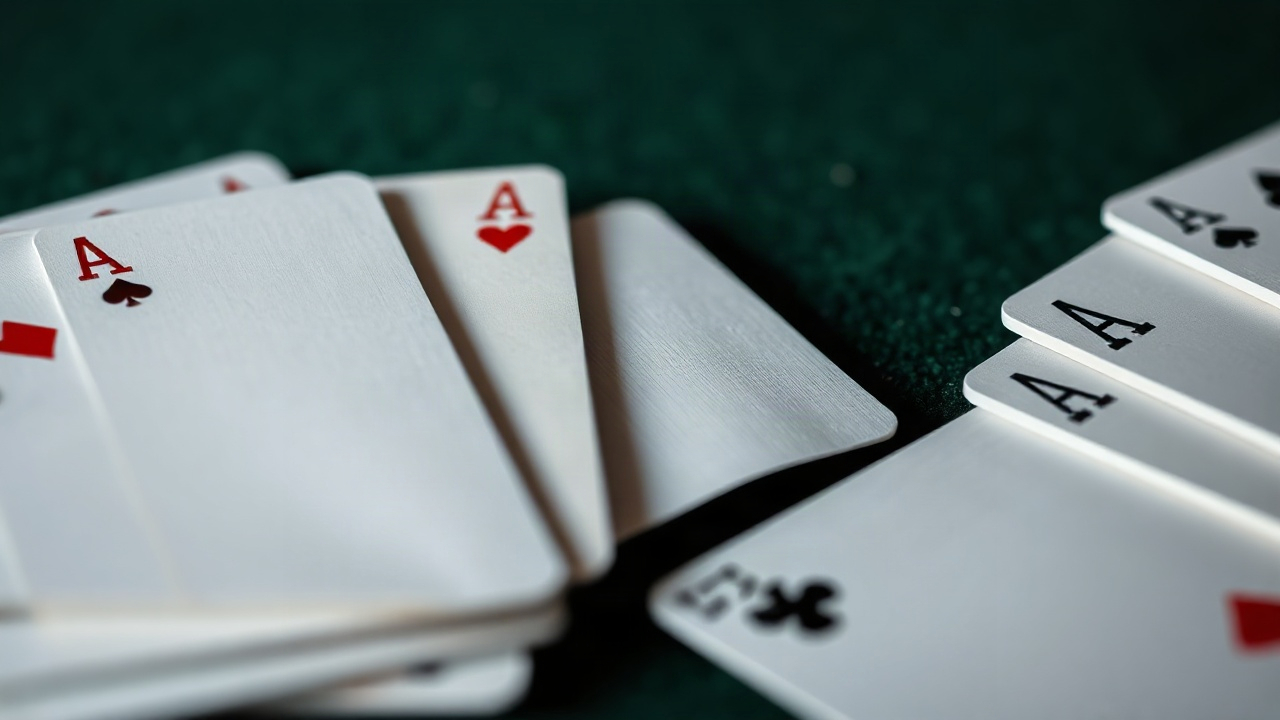
In the world of professional cards, every decision is filtered through the lens of Expected Value (EV). This is a mathematical calculation that determines the average outcome of a specific action if it were repeated an infinite number of times. Business negotiations benefit immensely from this rigorous approach, moving away from ‘hope’ and toward a statistical framework for success. A deal is ‘+EV’ if the potential rewards multiplied by their probability exceed the costs multiplied by their likelihood of occurring.
When faced with a complex contract, a negotiator should map out the different scenarios. For instance, if there is a 70% chance of a project being completed on time and a 30% chance of a six-month delay, the value of the contract must be adjusted to reflect these probabilities. This prevents the common error of planning for the ‘best-case scenario’ while ignoring the ‘weighted average’ of reality. Professional poker players never base their strategy on the best-case card coming on the turn; they play the odds of all possible cards.
The concept of Pot Odds translates directly to resource allocation. In poker, if the cost to call a bet is 20% of the total pot, the player needs to have a better than 20% chance of winning to make the move profitable. In a business merger, if the cost of due diligence and integration is $5 million, and the projected synergy value is $20 million, the ‘odds’ of the integration succeeding must be weighed against that $5 million ‘bet.’ If the chance of success is only 10%, the move is ‘-EV’ and should be avoided regardless of how attractive the $20 million figure looks.
| Poker Term | Business Equivalent | Strategic Application |
|---|---|---|
| Pot Odds | ROI Threshold | Determining if the cost of entry is justified by the potential payout. |
| Expected Value (EV) | Weighted Pipeline Value | Calculating the average financial outcome of a deal based on probability. |
| Equity | Market Share / Control | The ‘fair share’ of the value one currently holds in a given situation. |
| Variance | Market Volatility | The inevitable fluctuations in results despite making correct decisions. |
| Bankroll | Working Capital | The reserves required to survive a series of losses without going bankrupt. |
Dealing with Variance is another area where poker players have a psychological edge. In both cards and commerce, it is possible to make a perfect decision and still lose. A poker player doesn’t change their strategy just because a lucky opponent hit a one-outer on the river. Similarly, a business leader should not abandon a sound strategy because of an unpredictable market shift. Understanding variance allows one to stay the course during ‘downswings’ and avoid the ’tilt’ that often leads to catastrophic emotional decisions.
The ‘Sunk Cost Fallacy’ is perhaps the most frequent violator of EV principles. Many businesses continue to invest in failing projects because they have already spent millions. A poker player knows that the money already in the pot no longer belongs to them; the only question is whether the *next* dollar invested has a positive expected return. If the probability of winning the hand (or the project) is lower than the cost of continuing, the only logical move is to fold immediately, regardless of previous investment.
By quantifying the ‘Range’ of an opponent, business leaders can better prepare. In poker, ‘putting someone on a range’ means considering all the possible hands they could have, not just one. In a negotiation, this means considering all the possible motivations, constraints, and alternative offers the other party might have. This holistic view allows for more robust ‘if-then’ planning, ensuring that the negotiator is prepared for any ‘card’ the counterparty might play during the discussion.
The Tactical Bluff: Timing and Execution
Contrary to popular belief, a bluff is not a lie; it is a story. For a bluff to be successful in a negotiation, it must be internally consistent. If a negotiator claims they have another offer on the table but shows extreme desperation to close the deal today, the story falls apart. A successful bluff requires a foundation of credibility built through earlier stages of the interaction. It is a tactical tool used to change the opponent’s perception of the ‘strength of the hand’ and force them to fold their position.
Timing is the most critical element of a bluff. In poker, a bluff is most effective when the board texture changes—when a new card makes it plausible that the player has just completed a powerful hand. In business, this corresponds to external market shifts or the introduction of new data. If a competitor suddenly announces a breakthrough, a negotiator can use that ‘board change’ to bluff about their own company’s readiness, leveraging the uncertainty to extract better terms from a nervous partner.
The size of the ‘bet’ also matters. A small bluff often gets called because the cost of ‘seeing the cards’ is low. A massive, ‘all-in’ bluff is more likely to succeed because it forces the opponent to risk everything to prove the negotiator is lying. In business, this might look like a ‘take it or leave it’ final offer. However, one must be prepared for the possibility of being called. If the bluff is exposed, the negotiator’s credibility (their ‘table image’) is damaged, which can have long-term consequences for future deals.
Elements of a Credible Business Bluff
- Consistency: The narrative must match all observable facts and previous statements.
- Confidence: Any hesitation during the execution of the bluff will likely be picked up as a ‘tell.’
- Logical Progression: The bluff should follow a path that makes sense given the history of the negotiation.
- Exit Strategy: A plan for what to do if the bluff is called without destroying the entire relationship.
- Scarcity: Bluffs work best when they involve a limited-time opportunity or a unique resource.
One of the most effective forms of bluffing is the ‘semi-bluff.’ In poker, this is when a player bets with a hand that isn’t the best yet but has a good chance of becoming the best. In business, this might involve pitching a product that is still in final development. The negotiator isn’t lying about the product’s existence, but they are bluffing about its current ‘market-readiness.’ This is a lower-risk strategy because even if the bluff is called, the ‘hand’ (the product) may still ‘hit’ by the time the contract is actually signed.
Understanding the opponent’s ‘fold equity’ is also essential. This is the likelihood that the other party will simply give up rather than continue the struggle. If a counterparty is known to be risk-averse or is under extreme time pressure to deliver a result to their board, their ‘fold equity’ is high. In these cases, a well-timed bluff is significantly more likely to succeed because the cost of ‘calling’—risking the deal falling through—is higher than the cost of conceding to the bluff’s terms.
However, the ethical boundaries of bluffing must be navigated carefully. While strategic maneuvering is expected in high-level business, outright fraud is illegal and reputationally suicidal. The best bluffs are those that exploit the opponent’s assumptions rather than those built on false documentation. If a negotiator lets the other party assume they have more options than they do, they are playing the game. If they forge a letter of intent from a competitor, they have crossed into territory that poker players call ‘cheating,’ which leads to a permanent ban from the ‘game’ of professional commerce.
Emotional Resilience and the Stoic Negotiator

In the world of high-stakes poker, ‘Tilt’ is the ultimate enemy. Tilt is a state of mental or emotional confusion or frustration in which a player adopts a suboptimal strategy, usually resulting in the player becoming overly aggressive. In business, tilt occurs when a negotiator takes a counter-offer personally, becomes angry at a delay, or grows desperate to close a deal to meet a quarterly target. Mastering the poker face is not just about the exterior; it is about the internal discipline required to stay rational under immense pressure.
Resilience is built by detaching the process from the outcome. A professional gambler knows that if they play a hand correctly and lose, they have still succeeded in the long run. In business, a successful negotiator focuses on the quality of the ‘play’—the preparation, the reading of the room, and the adherence to the strategic plan. If the deal fails due to factors outside their control, they do not let it affect their confidence in the next negotiation. This emotional stability prevents a single setback from cascading into a series of poor decisions.
One technique to combat tilt is ‘distancing.’ When emotions begin to flare during a heated meeting, the negotiator can mentally step back and observe the situation as if they were a third-party consultant. This shift from ‘participant’ to ‘observer’ often cools the physiological response, allowing the prefrontal cortex to regain control from the amygdala. In poker, this is like analyzing a hand history in real-time, focusing on the logic of the bets rather than the frustration of the cards.
Strategies for Maintaining Composure
- Pre-Mortem Analysis: Visualizing everything that could go wrong before the meeting so that setbacks don’t come as an emotional shock.
- Physical Anchoring: Using a specific physical sensation (like pressing a thumb against a finger) to remind oneself to stay present and calm.
- Controlled Silence: Using silence as a tool to regain composure while simultaneously putting pressure on the opponent.
- The 24-Hour Rule: Never responding to a provocative email or offer immediately; waiting until the initial emotional spike has subsided.
- Humor: Using light, self-deprecating humor to break tension and reset the emotional tone of the room.
The concept of ‘Table Image’ is also an emotional tool. If a negotiator project an image of unflappable calm, it can be intimidating to opponents who are more emotionally volatile. People prefer to deal with those who are predictable and stable. By being the ‘rock’ at the table, the negotiator often dictates the pace and the emotional ‘temperature’ of the discussion, forcing others to react to them rather than the other way around.
Furthermore, recognizing when the *opponent* is on tilt is a massive advantage. If a counterparty becomes overly aggressive or begins making illogical demands, it is a sign that their emotions have taken the lead. Instead of meeting fire with fire, the poker-trained negotiator will remain calm and look for ways to exploit the opponent’s lack of discipline, perhaps by offering a deal that seems like a ‘win’ to their ego but is actually beneficial to the negotiator’s bottom line.
Finally, the most resilient negotiators are those who have a ‘Life Bankroll.’ This means they have options and resources outside of the current deal. Just as a poker player is more likely to play perfectly when they aren’t using their last $100 to enter a game, a business professional is more effective when they know that their survival doesn’t depend on this single negotiation. This ‘abundance mindset’ is the ultimate shield against the pressures of the bluff and the risks of the trade.
Managing Sunk Costs and Knowing When to Fold
One of the hardest lessons for both poker players and CEOs is learning when to walk away. There is a psychological phenomenon known as the ‘Endowment Effect,’ where we overvalue things simply because we own them or have invested time in them. In poker, this manifests as staying in a hand because you’ve already put half your chips in. In business, it’s the ‘Zombie Project’ that keeps getting funded because ‘we’ve come this far.’ Professional discipline requires the ability to cut losses the moment the Expected Value turns negative.
Knowing when to fold is an act of strength, not weakness. In a negotiation, if the other party is unwilling to meet your ‘walk-away point,’ continuing the conversation is often a waste of resources. By folding early, the negotiator preserves their ‘bankroll’—their time, energy, and capital—for more profitable opportunities. The ‘opportunity cost’ of staying in a bad negotiation is often much higher than the actual cost of the deal itself.
To manage this effectively, one must establish clear ‘exit criteria’ before the negotiation begins. These should be hard numbers or conditions that, if not met, trigger an immediate withdrawal from the deal. In poker, this is like setting a stop-loss or knowing your ‘fold-to-3-bet’ frequency. Without these pre-determined boundaries, the ‘heat of the moment’ will almost always lead to staying in the game too long, driven by the hope that the ‘next card’ will change everything.
| Scenario | Poker Action | Business Action | Reasoning |
|---|---|---|---|
| Opponent shows extreme strength | Fold | Exit Negotiation | The cost of ‘calling’ to see if they are bluffing is too high. |
| Investment no longer matches the reward | Fold | Divest/Cancel Project | The Expected Value has shifted to negative. |
| The ‘board’ changes significantly | Re-evaluate / Fold | Pivot or Withdraw | The fundamental assumptions of the deal have changed. |
| Emotions are clouding judgment | Walk away from table | Call for a Recess | To prevent ’tilt’ from causing a catastrophic error. |
Walking away also builds a powerful reputation. If the market knows that a company is willing to walk away from a deal that doesn’t make sense, their ‘All-In’ moves carry significantly more weight. They aren’t seen as desperate or easy to manipulate. This is the ‘Table Image’ of a shark—disciplined, patient, and only aggressive when the odds are in their favor. This reputation itself becomes a form of leverage in future interactions.
In long-term business relationships, the ‘fold’ can be a tactical maneuver. By conceding a small point or a minor negotiation now, one can build ‘social capital’ that can be cashed in later for a much larger advantage. Poker players call this ‘losing a small pot to win a large one.’ It keeps the opponent engaged and feeling confident, which may lead them to play more loosely when the stakes are eventually raised in the future.
Ultimately, the ability to walk away is the only true source of power in any negotiation. If one cannot say ‘no,’ they are not negotiating; they are merely participating in a process of surrender. The poker player’s mindset—viewing each hand as an independent event in a lifelong game—allows the business leader to treat each deal with the necessary detachment to make the cold, hard decision to fold when the situation demands it.
Information Asymmetry as a Competitive Tool

In every poker hand, there is a gap between what you know and what your opponent knows. Success comes from either narrowing that gap (learning more about them) or widening it (keeping them in the dark about you). In business, information asymmetry is the lifeblood of competitive advantage. If a company knows a market trend is coming before its competitors do, it can negotiate favorable long-term supply contracts. The goal is to move from a position of ‘incomplete information’ to one of ‘superior information.’
One way to gain information in a negotiation is through ‘probing bets.’ In poker, a player might make a small bet on the flop just to see how the other players react. Do they fold? Do they raise? This provides information about the strength of their hands for a relatively low price. In business, this can be done by proposing a ‘test’ clause or a small pilot project. The counterparty’s reaction to these minor proposals will reveal their true priorities and constraints without the negotiator having to commit to a full-scale agreement.
Conversely, protecting one’s own information is paramount. This is the ‘poker face’ of the organization. Secrets like profit margins, cost structures, or future product roadmaps should be guarded as carefully as hole cards. If an opponent knows exactly what it costs you to deliver a service, they know exactly how far they can push you on price. By maintaining a level of mystery, the negotiator forces the opponent to make assumptions—and as we’ve seen, assumptions can be exploited.
Ways to Leverage Information Asymmetry
- Due Diligence: The business version of ‘studying the film’ on an opponent to understand their previous playing style.
- The ‘Red Herring’: Intentionally emphasizing a minor point of the deal to distract the opponent from the negotiator’s true main objective.
- Selective Disclosure: Releasing information in small, controlled doses to build trust or to steer the negotiation in a specific direction.
- Expert Networks: Hiring consultants who have ‘played at the same table’ as the opponent to gain insights into their typical strategies.
- Silence: Perhaps the most effective tool for extracting information; most people feel a psychological need to fill silence, often revealing more than they intended.
The ‘Game Theory’ aspect of information comes into play during bidding wars. If multiple companies are bidding for a single asset, the one with the most information about the asset’s true value—and the other bidders’ budgets—is likely to win without overpaying (avoiding the ‘Winner’s Curse’). Poker players face this constantly in ‘multi-way pots,’ where they must balance their own hand strength against the potential hands of several different opponents simultaneously.
Managing information also involves ‘signal jamming.’ This is the act of providing so much data that the opponent cannot distinguish between what is important and what is irrelevant. In complex legal negotiations, this might involve ‘document dumping.’ While this must be handled ethically, it is a recognized tactic to slow down an aggressive opponent and force them to spend resources sorting through the ‘noise’ to find the ‘signal.’
In the digital age, information asymmetry is often about data analytics. A company that uses AI to predict supply chain disruptions has ‘seen the cards’ of the global market. When they sit down to negotiate with a supplier who is still using legacy systems, they have a massive strategic advantage. They aren’t just playing the man; they are playing the data, and the data is the most objective ‘poker coach’ one can have.
Long-term Bankroll Management in the Corporate World
A professional poker player’s most important asset isn’t their skill—it’s their bankroll. Without money to bet, even the best player in the world is just a spectator. In business, this translates to liquidity and capital preservation. Bankroll management is the practice of only risking a small percentage of your total capital on any single ‘hand’ (or project). This ensures that even a string of bad luck—a series of failed negotiations or market downturns—won’t put the company out of business.
Many businesses fail not because they had a bad strategy, but because they ‘went all-in’ on a single deal that didn’t pan out. They didn’t account for Variance. A poker-minded CFO will ensure that the company always has enough ‘chips’ to stay in the game. This might mean passing on a potentially massive but highly risky acquisition in favor of several smaller, more stable deals. It’s about staying power. The winner in both business and poker is often the one who can survive the longest.
The ‘Risk of Ruin’ is a mathematical concept that every negotiator should understand. If you have a 51% chance of winning a bet but you risk 100% of your capital, your risk of ruin is incredibly high despite the positive edge. In business, even if a deal has a ‘positive expected value,’ if the downside of that deal is the total collapse of the company, it is a move that a professional player would never make. They would look for a way to ‘limit their exposure’—perhaps by bringing in partners or hedging the risk.
Principles of Corporate Bankroll Management
- Diversification: Never putting the entire company’s future into the hands of a single client or contract.
- Liquidity Ratios: Maintaining a ‘cash cushion’ that allows the company to weather a ‘downswing’ in the market.
- Position Sizing: Ensuring that the size of an investment is proportional to the confidence in its success and its potential impact on the total ‘bankroll.’
- Avoiding ‘Life-Roll’ Bets: Never risking capital that is required for essential operations on speculative growth opportunities.
- Reinvesting Profits: Using ‘winnings’ from successful negotiations to build a larger bankroll, allowing for bigger ‘bets’ in the future.
There is also the concept of ‘playing within your stakes.’ A poker player doesn’t move from the $1/$2 table to the $50/$100 table just because they won a few hands. They move up only when their bankroll and their skill level can support the higher variance. Businesses often make the mistake of ‘over-scaling’ too quickly after a single success. A disciplined leader knows that each new level of business brings ‘tougher players’ and higher stakes, requiring a more robust financial foundation.
Finally, bankroll management is about the long game. In poker, you can’t judge a player by a single night; you judge them by their ‘win rate’ over thousands of hands. In business, true success is measured by the ability to generate consistent value over decades. This requires a temperament that prioritizes sustainability over ego-driven ‘big wins.’ By treating the company’s capital with the same respect a pro-player treats their chips, a business leader ensures that they will always have a seat at the table when the ‘greatest hand’ finally comes along.
In the end, the ‘art of the bluff’ and the skills of the poker table are about much more than just winning a single negotiation. They are about developing a mindset of strategic discipline, emotional control, and mathematical rigor. Whether one is deciding whether to call a bluff in a boardroom or fold a losing project, the principles remain the same: manage your information, control your emotions, and always play the odds.