
The Mathematical Enigma of the Sum 666

The core of the myth regarding roulette and the devil lies in a simple, yet striking piece of arithmetic. When one adds together every number found on a standard roulette wheel—from 1 to 36—the resulting sum is exactly 666. In Christian eschatology and popular Western culture, this figure is famously known as the Number of the Beast, as mentioned in the Book of Revelation. This coincidence has fueled centuries of superstition, turning a mechanical device into a symbol of spiritual peril for the more traditionalist segments of society.
This mathematical property is not an intentional occult design but a consequence of the triangular number sequence. A triangular number is the sum of the $n$ first natural numbers. For roulette, the calculation is (36 * 37) / 2, which equals 666. It is a natural property of the chosen range of numbers, yet the cultural weight of that specific total was enough to spark rumors that the inventor must have struck a bargain with the underworld to unlock the secrets of the wheel.
The fascination with this number often ignores the zeros. Whether it is a European wheel with a single green zero or an American wheel with a double zero, the sum of the red and black pockets remains the same. The zeros are the house’s edge, the mathematical vacuum that ensures the casino’s survival, but they do not alter the satanic arithmetic that theorists love to cite. This numerical quirk has become a permanent fixture in the marketing and lore of gambling houses worldwide.
Interestingly, the number 36 was likely chosen because it is highly divisible, offering various ways to split the board into halves, thirds, and quarters. The fact that its sum reaches such a controversial figure is considered by historians to be a purely accidental alignment of hobbyist mathematics and religious symbolism. However, for the legend-seekers, there is no such thing as an accident in a game of chance.
| Numerical Feature | Value / Total | Symbolic Meaning |
|---|---|---|
| Total Pockets (European) | 37 | The number of possibilities |
| High/Low Split | 18 each | Balance of the universe |
| Sum of 1 to 36 | 666 | The Number of the Beast |
| Zero Pocket | 0 | The Void / House Edge |
To many, the discovery of this sum was a gift to preachers and moralists who sought to discourage gambling. By linking the game to a demonic signature, they could argue that every spin was a dance with temptation. This narrative effectively transformed a game of physics into a theological battleground, where the gambler’s soul was the ultimate stake, regardless of the physical currency on the table.
The Legend of François Blanc and the Pact
The most enduring tale associated with the devil’s wheel involves François Blanc, the man often credited with bringing roulette to its peak of popularity in Homburg and later Monte Carlo. According to local legend, Blanc was so desperate to learn the secrets of the wheel and ensure his success as a casino operator that he entered into a Faustian bargain. The myth suggests that the devil granted him the mathematical secrets of the game in exchange for his soul, with the number 666 left on the wheel as a signature of the contract.
In reality, François Blanc was an incredibly shrewd businessman rather than an occultist. He understood that the removal of the double zero—a feature common in early French roulette—would attract more players by offering better odds. This move, which established the single-zero wheel as the European standard, was a brilliant marketing strategy. The success that followed was due to high-class branding and the legalization of gambling in Monaco, but the “deal with the devil” story was far more evocative for the public imagination.
Why the Legend Persisted
- It explained the sudden and immense wealth of the Blanc family.
- It added a layer of dangerous glamour to the Monte Carlo experience.
- It aligned with the 19th-century fascination with Gothic literature and the supernatural.
- It served as a cautionary tale for those losing their fortunes at the tables.
The story of the pact served both as a deterrent and an attraction. For the thrill-seeker, playing at a “cursed” wheel added a sense of rebellion and high stakes that went beyond the monetary. For the critics, it confirmed their worst fears about the nature of the casino industry. Blanc himself likely did little to dispel these rumors, as the mystique only served to increase the fame of his establishments.
Historically, the Blanc family turned Monte Carlo from a struggling seaside town into the world’s most famous gambling destination. This transformation was so rapid and total that it seemed almost magical to contemporaries. When people cannot explain economic success through hard work or luck alone, they often turn to the supernatural, and the 666 sum provided the perfect evidence for such a narrative.
Blaise Pascal and the Perpetual Motion Machine

Long before the glamorous casinos of the Mediterranean, the foundations of the roulette wheel were laid in a scientific laboratory. The 17th-century French mathematician and philosopher Blaise Pascal is widely credited with creating the prototype of the wheel while attempting to build a perpetual motion machine. Pascal was a deeply religious man, which makes the eventual association of his invention with the devil particularly ironic.
Pascal’s goal was a device that could continue to move indefinitely without an external energy source. While he failed to break the laws of thermodynamics, he succeeded in creating a nearly frictionless spinning mechanism. This device, combined with his groundbreaking work on the theory of probabilities, provided the perfect mechanical and theoretical basis for a gambling game. Pascal did not intend to create a tool for vice; he was searching for the physical secrets of the universe.
The transition from a scientific instrument to a casino staple happened gradually. By the late 1700s, the wheel had been adapted for gaming in Paris. The layout we recognize today, with its red and black pockets and alternating numbers, was designed to ensure a random distribution of results. It was the fusion of Pascal’s mechanical genius and the human desire for risk that birthed the game of roulette.
Scholars often point out that Pascal’s involvement in gambling theory was born from a request by a friend, the Chevalier de Méré, who wanted to solve a problem regarding a game of dice. This led to the development of the expected value concept. Thus, the roulette wheel is not just a symbol of luck, but a physical monument to the birth of modern probability theory. The “devilish” numbers are simply a byproduct of the math required to create a balanced game.
The Symbolism of the Wheel in Modern Culture
The image of the spinning wheel has deep roots in ancient philosophy, long before the invention of the casino. The Rota Fortunae, or Wheel of Fortune, was a concept in medieval and ancient philosophy representing the capricious nature of Fate. The goddess Fortuna spins the wheel at random, changing the positions of those on the wheel—some suffer great misfortune, while others rise to the top. This existing cultural framework made it easy for roulette to inherit a sense of mystical significance.
In the context of the 666 myth, the wheel represents the cycle of temptation and the unpredictability of life. The rhythmic clicking of the ball against the mahogany frets is often described in literature as a hypnotic sound, one that draws the player into a trance-like state. This “hypnosis” was frequently cited by moralists as evidence of the game’s soul-snaring capabilities, reinforcing the connection to the demonic.
Modern media has leaned heavily into this symbolism. Films and novels often use the roulette wheel to signify a character’s descent into ruin or their final gamble against destiny. The red and black colors themselves are frequently associated with life and death, or passion and darkness. This visual binary enhances the drama of the game, making every spin feel like a microcosm of the human struggle against an indifferent universe.
Common Cultural Associations
- Red and Black: The eternal struggle between light and darkness.
- The Circle: Infinity, the cycle of debt, and the recurring nature of chance.
- The Ball: The individual soul tossed by the winds of fate.
- The Croupier: A silent arbiter or a gatekeeper to the unknown.
The 666 connection is simply the ultimate “Easter egg” in this cultural tapestry. It provides a concrete hook for the imagination, a specific detail that links a physical object to a cosmic narrative. Even for those who do not believe in the literal devil, the number serves as a reminder of the inherent risks and the potentially “wicked” allure of the gambling floor.
The Evolution of Wheel Design and Layout

The physical design of the roulette wheel has undergone several iterations to ensure fairness and prevent tampering, yet the number sequence has remained remarkably consistent. There are two primary layouts: the French/European and the American. While they differ in the number of zeros, both maintain the same set of 36 numbers that sum to 666, preserving the core of the myth across different continents.
The arrangement of numbers on the wheel is not sequential. If you look at a European wheel, you will notice that the numbers are distributed to balance high and low, even and odd, and red and black as much as possible. For example, low numbers (1-18) and high numbers (19-36) alternate with some frequency, though not perfectly. This complexity was designed to prevent “sector betting” where a player could easily cover a specific physical area of the wheel with a single type of bet.
| Feature | European Wheel | American Wheel |
|---|---|---|
| Total Numbers | 37 (1-36 + 0) | 38 (1-36 + 0 + 00) |
| House Edge | 2.70% | 5.26% |
| Sequence Logic | Symmetry based on 0 | Symmetry based on 0/00 |
| Sum of 1-36 | 666 | 666 |
The manufacturing of these wheels is a feat of precision engineering. Modern wheels are made from high-grade wood like mahogany or walnut, with brass or chrome components. The “frets” or dividers between the pockets must be exactly the same height to avoid creating a “biased wheel” where the ball lands in certain sections more often than others. The pursuit of the perfect, random spin is a testament to human ingenuity, even if the result is a machine that sums to the “devil’s number.”
The introduction of the double zero in the United States was a purely economic decision. It nearly doubled the house advantage, making the game much more profitable for casino owners. Interestingly, this version of the wheel is often seen as more “aggressive,” which some might argue fits the devilish theme even better than the more player-friendly European version. Yet, the 666 sum remains the constant thread connecting both traditions.
Psychology of the “Devil’s Luck” in Gambling
The persistence of the 666 myth can also be explained through the lens of psychology. Humans are evolved to find patterns in chaos—a phenomenon known as apophenia. When we encounter a random system like a roulette wheel, our brains look for meaning. Finding a famous biblical number in the sum of the pockets provides a satisfying, albeit spooky, explanation for the randomness of the game.
Furthermore, the concept of “devil’s luck” or “selling one’s soul” provides a narrative framework for the extreme swings of fortune seen in gambling. When a player wins a massive amount against all odds, others may jokingly (or half-seriously) suggest they have supernatural help. Conversely, a devastating loss can be blamed on a “cursed” wheel. This externalization of luck helps individuals cope with the emotional intensity of the casino environment.
Why We Love the Myth
- Narrative Satisfaction: It turns a boring math fact into a campfire story.
- Sense of Danger: It enhances the thrill of the gamble.
- Moral Justification: It provides a shorthand for why gambling is “bad.”
- Historical Connection: It links modern players to centuries of tradition and superstition.
The myth also plays into the “illusion of control.” By believing there is a supernatural element to the wheel, some players feel that they can somehow influence the outcome through rituals or by avoiding certain “cursed” numbers. In reality, the wheel is governed by the cold laws of physics and the inescapable reality of the house edge, but the devil myth makes the experience feel much more personal and dramatic.
In many ways, the 666 myth is a form of dark branding. Casinos don’t necessarily want you to think they are evil, but they do want you to feel that you are entering a world apart from the mundane—a place where the normal rules of society and even nature might not apply. The “Number of the Beast” is the perfect symbol for this liminal space between the ordinary and the extraordinary.
The Great Roulette Riots and Religious Opposition
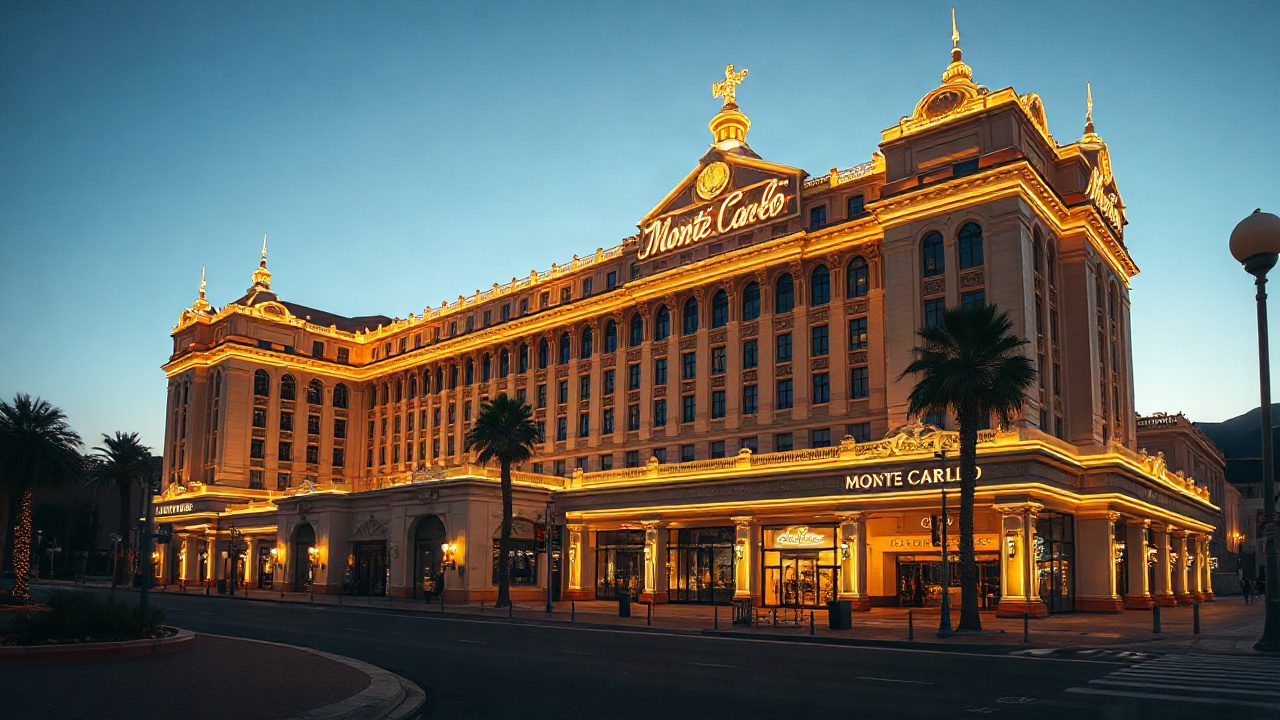
Throughout history, the association between roulette and the devil was used as a powerful political tool. In the 19th century, as gambling halls spread across Europe, religious and moral conservative groups used the “666” fact as a centerpiece of their campaign to ban the game. They argued that the state was literally sponsoring demonic activity by licensing casinos.
In several European cities, this led to what historians call “moral panics.” There were instances where protesters gathered outside gambling houses, reciting scripture to ward off the “evil spirits” within. The roulette wheel became a lightning rod for broader anxieties about the industrial revolution, the rise of the leisure class, and the perceived decay of traditional values. The 666 sum was the “smoking gun” that proved the game’s malevolent origin.
Despite the fervor of these movements, the popularity of the game only grew. The opposition actually helped solidify the wheel’s status as a symbol of sophisticated rebellion. To play roulette was to thumb one’s nose at the restrictive moral codes of the era. This tension between the sacred and the profane is exactly what gave Monte Carlo and similar destinations their aura of forbidden luxury.
Eventually, the legal battles were won not by theologists, but by economists. Governments realized that the revenue generated from gambling taxes was too significant to ignore. The “devil’s wheel” became a primary source of funding for public works, roads, and hospitals. This creates a strange historical irony: the very machine branded as satanic by the church ended up building the infrastructure of modern secular society.
The Math of Chance vs. The Magic of Myth
When we strip away the legends of François Blanc and the biblical warnings, what remains is a masterclass in probability. The roulette wheel is designed to be a perfectly balanced machine where every number has an equal 1-in-37 (or 38) chance of appearing on any given spin. The “magic” isn’t in the devil’s influence, but in the Law of Large Numbers.
This law dictates that while short-term results are unpredictable, the long-term outcome is mathematically certain. The casino does not need a pact with the devil to win; it only needs time and a sufficient volume of bets. The 666 sum is a static curiosity, but the real “demon” for the player is the house edge. Over thousands of spins, the zero ensures that the house will always retain a percentage of the total wagers.
Mathematical Pillars of Roulette
- Probability: The likelihood of a specific event occurring.
- Variance: The short-term fluctuations that can lead to winning streaks.
- Expected Value: The amount a player can expect to win or lose on average per bet.
- Independent Events: The fact that the wheel has no memory; every spin is a fresh start.
The beauty of the 666 myth is that it provides a human face to these cold, abstract concepts. It is much easier to imagine a sinister figure behind the wheel than it is to internalize the complex statistics of binomial distribution. However, for the professional gambler or the mathematician, the real wonder is not the sum of the numbers, but the elegant way the wheel turns chaos into a predictable business model.
Ultimately, the story of the devil and the roulette wheel is a testament to the power of storytelling. It shows how a simple mathematical coincidence can be woven into a rich tapestry of history, philosophy, and pop culture. Whether you see the wheel as a scientific achievement, a harmless diversion, or a relic of a demonic pact, its 666-summing pockets will continue to spin, captivating the imagination of every person who watches the ball drop into a slot.