
The Visionary Mechanic from Bavaria

The story of the first slot machine does not begin in a high-tech laboratory or a modern casino, but in a small workshop in San Francisco. Charles August Fey, a young mechanic who emigrated from Bavaria, possessed a unique combination of technical prowess and an entrepreneurial spirit. Before he changed the world of entertainment, Fey spent years honing his skills in various mechanical fields, learning how to manipulate metal and clockwork precision. His background in electrical equipment manufacturing provided the necessary foundation for what would eventually become the Liberty Bell.
Fey was not just a tinkerer; he was a problem solver who observed the social dynamics of the city’s saloons. At the time, early gambling devices were clunky and required a human attendant to pay out prizes, which were often cigars or free drinks. Fey saw an opportunity to automate this process, creating a machine that could function independently. He understood that the key to success lay in simplicity and reliability, two traits that were often missing from the experimental machines of his contemporaries.
The atmosphere of San Francisco during the late nineteenth century was ripe for innovation. It was a city of gold seekers, gamblers, and inventors. Fey immersed himself in this environment, using his evenings to sketch designs that would eliminate the need for human intervention in gaming. He worked tirelessly on a mechanism that could read the alignment of spinning wheels and trigger a mechanical payout. This was a significant leap forward from the existing poker machines that relied on fifty-two cards, making the odds too complex for simple automation.
By reducing the number of variables, Fey laid the groundwork for a revolution. He replaced the heavy deck of cards with three spinning reels, significantly simplifying the internal logic required for a payout. This transition from complex card combinations to simple symbol matching was the stroke of genius that defined his legacy. It allowed the machine to calculate wins instantly, a feat that seemed almost magical to the patrons of the local establishments.
The initial prototypes were modest, but they proved the concept. Fey’s workshop became a hub of secret activity as he refined the tension of the springs and the balance of the reels. He was meticulous about the materials he used, opting for durable cast iron and brass to ensure his machines could withstand the heavy use of a bustling saloon. Every gear was hand-filed, and every lever was tested thousands of times to ensure a smooth operation that would not jam under pressure.
Fey’s refusal to sell his invention initially was a calculated business move. Instead of a one-time profit, he opted for a rental model, placing machines in local bars and splitting the proceeds with the owners. This ensured a steady stream of income and allowed him to maintain and upgrade the units personally. This business model would later become a standard in the vending and gaming industries, proving that Fey was as much a businessman as he was an engineer.
The Birth of the Three-Reel Mechanism
The core innovation of the Liberty Bell was the three-reel system. Prior to this, machines like the ones produced by Sittman and Pitt used five drums with card faces. While popular, these machines were nearly impossible to automate for direct payouts because of the thousands of possible combinations. Fey realized that if he could reduce the complexity, he could create a machine that paid out coins directly into a tray, providing instant gratification to the player.
He settled on three reels because it provided the perfect balance between mystery and mathematical transparency. With three reels, the number of combinations was manageable enough for a mechanical device to recognize. This was the birth of the physical ‘random number generator’—a series of stops and notches on the reels that determined where they would land. The physical feedback of the reels clicking into place became a sensory experience that players came to crave.
The symbols chosen for the reels were iconic and easily recognizable, even in the dim light of a smoky bar. Fey used horseshoes, diamonds, spades, hearts, and, of course, the Liberty Bell. The choice of the bell was both patriotic and practical; it was a symbol everyone knew, and it represented the highest payout. When three bells lined up, the machine would release a shower of nickels, a sound that became synonymous with luck and fortune in the American West.
Technical Specifications of the Original Machine
- Material: Heavy-duty cast iron housing with decorative flourishes.
- Coinage: Designed specifically for the five-cent nickel.
- Reels: Three vertical metal strips with painted symbols.
- Payout Mechanism: A series of notched discs that allowed a slider to release coins.
- Security: Internal baffles to prevent ‘fishing’ with strings or magnets.
The mechanical logic of the 1890s was entirely gear-driven. There were no electronics, no sensors, and no software. Everything was handled by the timing of a clockwork spring that was wound by the player pulling the side lever. This lever, which earned the machines the nickname ‘one-armed bandits,’ was connected to a shaft that spun the reels and then gradually engaged a braking system. The sequence in which the reels stopped—first, second, then third—added an element of suspense that is still replicated in digital slots today.
Fey’s payout table was straightforward, which helped build trust with the players. They could see exactly what they needed to win. This transparency was vital in an era where many gambling games were rigged or highly suspicious. The Liberty Bell offered a fair chance, or at least the perception of one, which was enough to keep the nickels flowing. The machine’s reliability meant that it rarely broke down, further cementing its status as a staple of San Francisco nightlife.
The Engineering Marvel of the Payout System
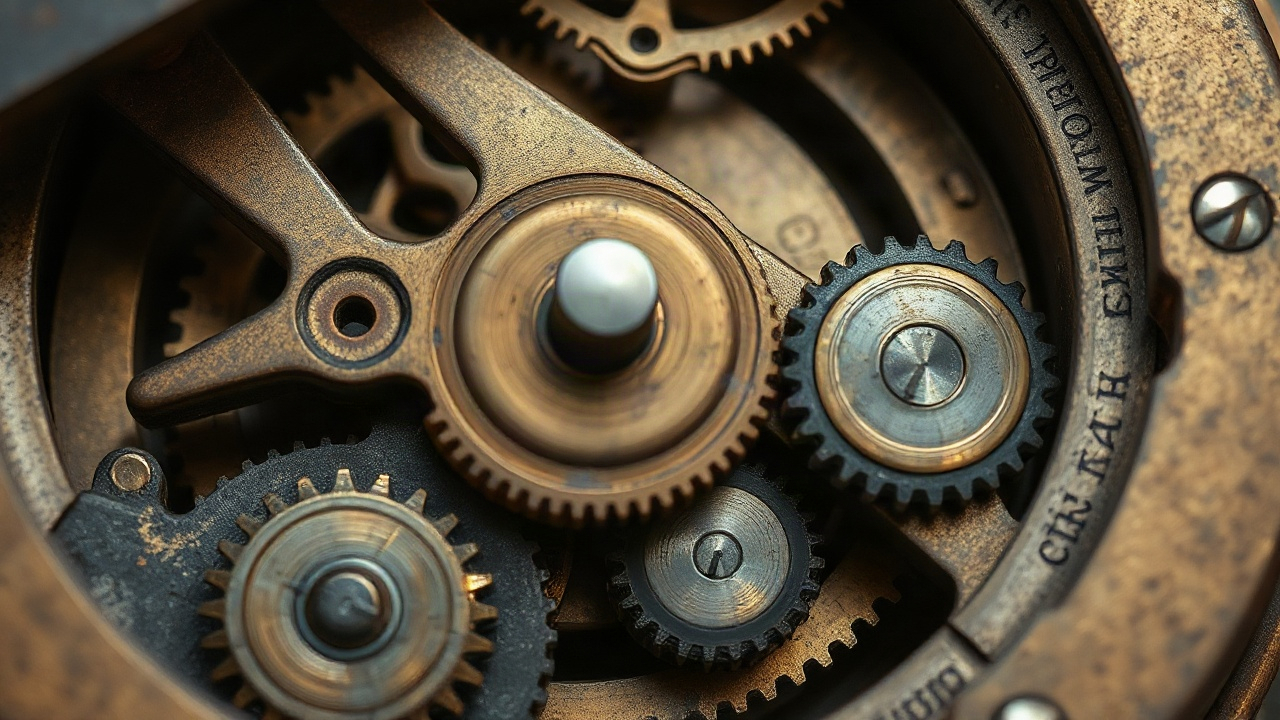
Automating the payout was the most difficult hurdle Fey faced. He had to design a system where the machine could ‘read’ the symbols on the reels without any electronic components. He achieved this through a series of concentric discs attached to each reel. Each disc had holes or notches corresponding to the symbols on the reel’s surface. When the reels stopped, a set of sensing pins would attempt to push through these holes.
If the pins found a path through all three discs—indicating a winning combination—the movement would trigger a release lever. This lever moved a horizontal slider that pushed a specific number of coins from a vertical tube into the collection cup. It was a masterpiece of Victorian engineering. The precision required to align these mechanical ‘logic gates’ was immense, as a fraction of a millimeter could result in a failed payout or a jammed machine.
The physical construction of the coin tube was also a challenge. It had to handle coins of varying wear and tear without clogging. Fey designed a weighted system that ensured the coins were always pressed firmly against the bottom slider, ready to be ejected. This level of detail ensured that the Liberty Bell could operate for weeks without needing a technician, making it a favorite for saloon owners who didn’t want to deal with constant maintenance.
| Symbol Combination | Original Payout (Nickels) | Prize Description |
|---|---|---|
| 3 Liberty Bells | 10 | The Grand Jackpot |
| 3 Hearts | 8 | High Tier Win |
| 3 Diamonds | 4 | Mid Tier Win |
| 3 Spades | 2 | Low Tier Win |
| 2 Horseshoes | 1 | Small Reward |
The sounds produced by the machine were not accidental. Fey understood that the auditory experience was part of the draw. The heavy thud of the reels stopping, the metallic ‘clack’ of the handle, and the ringing of the coins against the cast iron tray created a symphony of gambling. This sensory feedback loop reinforced the behavior of the player, making the machine incredibly addictive even without the bright lights and digital screens of today.
Safety and anti-cheat measures were also integrated into the design. Because the machines were often left unattended, they were vulnerable to tampering. Fey included a ‘coin detector’ that checked the weight and size of the nickel to prevent the use of slugs or foreign currency. He also designed the casing to be incredibly heavy and difficult to open, ensuring that the ‘house’s’ share remained secure until his collection rounds.
The Cultural Impact on San Francisco
San Francisco in the late 1800s was the perfect laboratory for the Liberty Bell. The city was a melting pot of cultures and social classes, all united by a desire for quick riches and entertainment. Fey’s machines were initially placed in high-traffic areas like the Palace Hotel and various upscale gentlemen’s clubs. However, they soon spread to every corner of the city, from the docks of the Embarcadero to the bars of Nob Hill.
The machine changed the social fabric of the saloon. Instead of just standing at the bar and drinking, patrons now had a focal point for interaction. Groups would gather around the Liberty Bell, cheering as the reels spun. It democratized gambling, making it accessible to anyone with a spare nickel, not just those with the skills for poker or the capital for high-stakes betting. It was the first ‘casual’ gaming experience, paving the way for the multi-billion dollar industry we see today.
Local authorities were initially unsure how to handle this new invention. Because the payouts were relatively small and the machine was often viewed as a novelty, it bypassed many of the stricter gambling laws of the time. This ‘grey area’ allowed the Liberty Bell to proliferate rapidly. By the turn of the century, there were hundreds of Fey’s machines across the city, and the demand was so high that his small workshop could barely keep up with production.
The success of the machine also brought imitation. Other manufacturers tried to copy Fey’s design, but none could match the reliability of his original mechanism. These competitors often produced ‘clones’ that were prone to jamming, which only served to increase the reputation of the genuine Liberty Bell. Fey’s brand became a mark of quality, and saloon owners specifically requested his machines over cheaper alternatives.
Even the 1906 earthquake, which devastated much of San Francisco, couldn’t stop the momentum of the slot machine. While Fey’s original factory was destroyed, he quickly rebuilt. The spirit of the city, characterized by resilience and a love for life, was mirrored in the survival of his invention. The machine became a symbol of the city’s recovery, a familiar comfort in a changing landscape.
The Evolution into the ‘Fruit Machine’

As the legal landscape began to shift against gambling, the Liberty Bell had to adapt to survive. Anti-gambling leagues and religious groups began to lobby for the banning of these ‘temptations.’ In response, the industry underwent a fascinating transformation. To circumvent laws that prohibited cash payouts, manufacturers began to offer prizes in the form of chewing gum or candy. This led to the introduction of the famous fruit symbols that are still used today.
The Industry Novelty Company and later the Mills Novelty Company began producing machines that looked like the Liberty Bell but featured symbols like cherries, plums, and lemons. These symbols represented the flavor of the gum that the machine would ‘dispense’ as a prize. While the gum was often just a legal cover, it allowed the machines to remain in public spaces like drugstores and railway stations. The ‘Bar’ symbol actually originated from the logo of the Bell-Gum Fruit Company.
Transformation Highlights
- Symbol Change: Transition from bells and horseshoes to fruit and bars.
- Legal Status: Rebranding as ‘vending machines’ rather than ‘gambling devices.’
- Market Expansion: Moving from bars into family-oriented venues.
- Brand Legacy: The establishment of the Mills ‘Operator Bell’ as a successor.
This period of adaptation was crucial for the long-term survival of the slot machine. It proved that the core concept—spinning reels and random rewards—was incredibly resilient. Even when the ‘reward’ was a piece of peppermint gum, the psychological thrill of the spin remained. This era also saw the transition from cast iron to lighter materials like sheet metal and wood, making the machines easier to transport and hide from the authorities if necessary.
Charles Fey eventually collaborated with the Mills Novelty Company, allowing them to use his patents to mass-produce the machines. This collaboration brought the Liberty Bell design to a global audience. The ‘Operator Bell’ featured a goose-neck coin intake and was much more portable than Fey’s original heavy cast iron model. It was this version that truly conquered the world, spreading across Europe and Asia, and cementing the three-reel format as the gold standard of mechanical gaming.
The Mathematics of the Early Slots
While the mechanics were impressive, the mathematics behind the Liberty Bell were equally revolutionary. Fey had to ensure the machine was profitable for the operator while still offering enough wins to keep the player engaged. This balance is known today as the ‘Return to Player’ (RTP) percentage. In the original Liberty Bell, the odds were calculated physically by the number of symbols on each reel and the depth of the notches on the internal discs.
Each reel typically had 10 symbols. With three reels, there were 1,000 possible combinations (10 x 10 x 10). By controlling how many high-paying symbols (like the Bell) were on each reel versus low-paying symbols (like the Horseshoe), Fey could precisely set the house edge. This was the first time that a game’s profitability could be mathematically guaranteed over a long period of play, regardless of the player’s skill.
The concept of ‘near misses’ also began here. Fey realized that if a player saw two Liberty Bells and the third one was just one stop away, they were much more likely to play again. He could manipulate the frequency of symbols to create these ‘teasing’ moments. While he didn’t have computer algorithms to help him, his intuitive understanding of human psychology was ahead of his time. He built the machine to be a master of ‘almost winning.’
| Probability Factor | Mechanical Implementation | Player Impact |
|---|---|---|
| Reel Stops | Physical notches on the disc | Determines the landing spot |
| Symbol Frequency | Painting more low-value icons | Controls the hit frequency |
| Payout Ratio | Size of the coin slider | Manages the house edge |
| Cycle Length | 1,000 combinations | Predicts long-term profit |
This mathematical foundation allowed for the professionalization of the gaming industry. For the first time, an owner could calculate exactly how much a machine would earn in a month, assuming a certain number of plays. It turned gambling from a game of chance into a predictable business model. This transparency for the owner, combined with the mystery for the player, created the perfect economic engine for the burgeoning casino industry.
The Legacy and Preservation of the First Machine
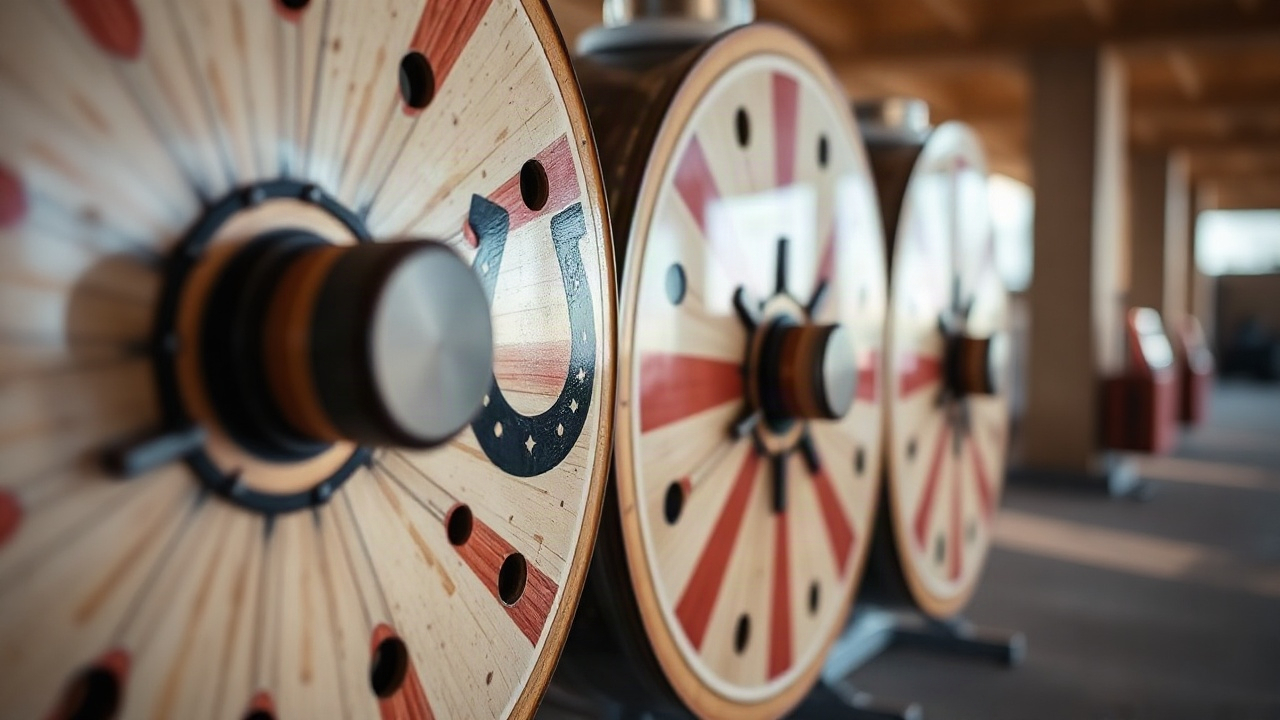
Today, the original Liberty Bell is a priceless piece of history. Very few of Fey’s original hand-built machines survived the decades of heavy use, legal crackdowns, and natural disasters. The most famous surviving specimen is housed in the Liberty Belle Saloon and Restaurant in Reno, Nevada, which was owned by Fey’s grandsons. It serves as a pilgrimage site for historians and gaming enthusiasts alike, standing as a testament to the ingenuity of a single man.
The influence of the Liberty Bell can be seen in every modern digital slot machine. Even the most advanced video slots in Las Vegas today still use the basic logic established by Fey. The concept of ‘lines,’ ‘reels,’ and ‘jackpots’ are all direct descendants of the 1890s mechanism. Modern software developers still study the pacing and feedback loops of the Liberty Bell to understand what makes a game engaging.
Preservation efforts for these machines are intense. Antique collectors and museums go to great lengths to restore original units, often having to custom-manufacture parts that haven’t been made in over a century. A fully functional original Liberty Bell can fetch hundreds of thousands of dollars at auction, reflecting its status as the ‘Holy Grail’ of coin-op history. It is more than just a gambling device; it is a piece of industrial art.
Why the Liberty Bell Matters Today
- Engineering Heritage: It represents the peak of Victorian-era mechanical logic.
- Economic History: It birthed the multi-billion dollar automated gaming industry.
- Cultural Icon: The ‘Liberty Bell’ symbol remains the universal icon for a jackpot.
- Design Philosophy: It taught us that simplicity is often the most effective design.
When we look at a modern smartphone or a complex computer, it’s easy to forget that the logic of automation started with simple gears and levers. Charles Fey’s contribution to technology extends beyond the casino floor. He was a pioneer in the field of human-machine interaction, creating a device that could ‘communicate’ with a user, process a transaction, and deliver a result—all without a single line of code or a drop of electricity.
The Enduring Appeal of Mechanical Gaming
Despite the rise of virtual reality and high-definition graphics, there is a growing movement of enthusiasts who prefer the mechanical era of gaming. There is something inherently satisfying about the physical world that digital pixels cannot replicate. The weight of the lever, the smell of the lubricating oil, and the genuine metallic ring of a falling coin offer a tactile experience that resonates with our human senses.
This nostalgia has led to a ‘retro-tech’ revival, where new machines are being built with old-fashioned mechanical components. Designers are finding that by stripping away the digital distractions, they can recapture the pure excitement that the first players felt in that San Francisco saloon. The Liberty Bell serves as the blueprint for this movement, reminding us that at the heart of every great invention is a simple, powerful idea that captures the imagination.
The story of the Liberty Bell is ultimately a story of human ingenuity. It’s about a man who looked at a chaotic world and saw a way to bring order and entertainment to it through mechanics. Charles Fey didn’t just build a machine; he built a legacy that continues to spin, click, and pay out across the globe. As long as there is a desire for a little bit of risk and a lot of excitement, the spirit of the Liberty Bell will live on, one spin at a time.
Reflecting on this journey, we see that the most impactful inventions are often those that tap into fundamental human desires. The desire for a fair game, the thrill of the unknown, and the joy of a sudden reward are universal. Fey’s machine provided a vessel for these emotions, packaged in a beautiful, cast-iron box that changed history forever. The Liberty Bell remains a shining example of how a single person’s vision can reshape the world of entertainment and technology.