
The Mathematical Soul of High Volatility

In the world of gambling, volatility is not just a statistical term; it is the heartbeat of the experience. High volatility slots are designed for those who find no satisfaction in the rhythmic pitter-patter of small, frequent wins. Instead, these machines are built for the storm. They operate on a mathematical model where the variance is stretched to its absolute limits, meaning that the gap between the average result and the actual outcome can be astronomical. For the high roller, this is the primary attraction. The unpredictability isn’t a bug; it is the defining feature that allows for life-altering multipliers.
Understanding the difference between Return to Player (RTP) and volatility is crucial for anyone stepping into the high-stakes arena. While RTP tells you how much a machine pays back over millions of spins, volatility describes the path taken to get there. A low volatility slot is a smooth, paved road; a high volatility slot is a jagged mountain peak. High rollers gravitate toward the mountain because they know that the highest rewards are never found on level ground. They are looking for the peaks, the 10,000x or 50,000x multipliers that exist only in the realm of high variance.
This preference is rooted in a deep understanding of probability. When a slot pays out frequently, those payments must, by necessity, be small to maintain the RTP. These tiny wins are often less than the original bet, serving as nothing more than a slow drain on the bankroll. High rollers view these ‘wins’ as a distraction. They would rather endure a long sequence of dead spins if it means that the eventual hit will be substantial enough to dwarf all previous losses. This is the art of the hunt: the ability to withstand the silence of the reels in anticipation of the roar.
Key Characteristics of High Volatility Slots
- High Multipliers: Payouts can exceed 20,000 times the stake.
- Bonus Heavy: Most of the value is locked behind complex bonus features.
- Long Dry Spells: It is common to go 50 or 100 spins without a single return.
- Aggressive Math Models: Designed to reward patience and deep pockets.
The Psychology of the Big Game
High rollers possess a unique psychological makeup that separates them from the casual player. While the average visitor to a casino seeks entertainment and a sense of ‘winning’ often, the high roller seeks the adrenaline of the extreme. The psychological phenomenon of ‘intermittent reinforcement’ is at play here, but with a twist. In high volatility games, the reinforcement is so rare and so powerful that it creates a different kind of mental conditioning. The player becomes immune to the small losses, focusing entirely on the structural integrity of their strategy and the potential of the grand prize.
There is also an element of status and self-perception involved. Choosing to play a game that is known for its cruelty requires a certain level of confidence. It is a statement that the player has the financial fortitude and the emotional discipline to face a machine that refuses to pay. This creates a sense of mastery over the chaos. When a high roller hits a massive win on a high volatility slot, it isn’t just luck to them; it is the validation of their endurance and their willingness to play the game on its hardest setting.
Managing emotions is the most difficult part of this journey. The ’tilt’—a term borrowed from poker—is a real danger. High rollers who succeed are those who can watch their balance dip significantly without losing their composure. They treat the game as a series of calculated risks rather than a series of emotional events. This detachment is what allows them to stay in the game long enough to see the variance swing in their favor. It is a cold, calculated approach to a hot, vibrant environment.
The Mechanics of Rare Payouts

Why do these slots pay so rarely? The answer lies in the distribution of the hit frequency. A standard slot might have a hit frequency of 25-30%, meaning every fourth spin pays something. A high volatility beast might drop that to 10-15%. This creates more ‘room’ in the mathematical budget for the jackpot. By not paying out for 85% of the spins, the game can afford to pay out 50,000 coins on a single spin for a lucky few. This redistribution of wealth within the game’s logic is what creates the high-stakes environment.
Most of these games funnel their power into the Free Spins or Respin rounds. In a low volatility game, the base game might account for 70% of the total RTP. In a high-risk slot, the base game might only account for 30%, with the remaining 70% of the value hidden in the bonus features. This is why high rollers often use ‘bonus buys’ if the jurisdiction allows, or they play with a strategy designed to trigger the feature as efficiently as possible. They aren’t playing the slots; they are playing the bonus round.
Furthermore, the symbols themselves are weighted differently. In these games, the top-tier symbols often have exponential payout curves. While 3 of a kind might pay almost nothing, 5 of a kind—especially when combined with multipliers—explodes. This ‘top-heavy’ paytable is the hallmark of high-volatility design. It ensures that the majority of players will lose, but the winners will win big enough to keep the legend of the game alive. It is a digital version of ‘winner takes all’.
| Feature | Low Volatility | High Volatility |
|---|---|---|
| Hit Frequency | High (25-35%) | Low (10-20%) |
| Max Win Potential | Low (500x – 1000x) | Extreme (10,000x – 100,000x+) |
| Bonus Round Power | Moderate | Very High |
| Bankroll Requirement | Small to Medium | Large / Substantial |
| Average Session Length | Longer (low risk) | Shorter (high risk) |
Bankroll Management as a Shield
For a high roller, bankroll management isn’t about saving money; it’s about staying in the fight. When playing slots that pay rarely, the primary threat is ‘ruin’—running out of money before the variance swings. Professional-level players calculate their ‘number of spins’ rather than their total dollar amount. If a game is extremely volatile, a player might want a bankroll that covers at least 500 to 1000 bets. This buffer is the only thing that stands between them and a total loss during a ‘dry’ cycle.
High rollers often use a tiered betting system. They might start with smaller bets to ‘test the waters’ or find a rhythm, and then increase their stakes when they feel the game is due for a feature (though mathematically, each spin is independent, the psychological pacing remains). More importantly, they have a strict ‘Stop Loss’ and a ‘Take Profit’ limit. They know exactly when to walk away, whether they are up or down. This discipline is what prevents a bad run from becoming a total financial disaster.
Another tactic is the use of the ‘Martingale’ or similar progression systems, though these are extremely dangerous in slots. Most seasoned high rollers avoid simple progressions and instead focus on ‘Bet Levels.’ They understand that at high stakes, even a 1% difference in the bet size can significantly impact their longevity. They treat their gambling capital like a venture capital fund—allocating resources to high-risk ‘startups’ (the slots) in hopes of a massive exit.
The Allure of the ‘Nudge’ and ‘Hold’ Mechanics

Modern high-volatility slots often incorporate mechanics that give a sense of control, even if the outcome is predetermined by the RNG. Mechanics like Nudges, Sticky Wilds, and Expanding Reels are favorites among high rollers. These features often signal that a big win is building. When a player sees a sticky wild land in the first reel during a free spin round, the tension skyrockets. They know that the ‘potential’ for a massive payout has just increased exponentially.
These mechanics serve to visualize the volatility. Instead of a simple ‘yes’ or ‘no’ on a spin, the game creates a narrative. A high roller enjoys the story being told on the reels. A ‘near miss’ isn’t a frustration to them; it’s proof that the machine is capable of hitting the desired combination. They look for games where the mechanics allow for ‘cascading’ wins, where one win triggers another, and another, with increasing multipliers. This creates a compounding effect that is the holy grail of high-stakes play.
Why Mechanics Matter to Pro Players
- Progressive Multipliers: Each consecutive win increases the payout factor.
- Reel Expansion: Increasing the number of ways to win mid-round.
- Symbol Upgrades: Turning low-value icons into high-value ones during bonuses.
- Collector Features: Gathering special tokens to unlock the ‘Super’ bonus.
The Cultural Shift Toward ‘Hardcore’ Slots
In recent years, the industry has seen a massive shift toward what many call ‘hardcore’ or ‘insane’ volatility slots. This trend was driven by the rise of streaming culture and the desire for ‘viral’ wins. High rollers have led this charge, moving away from the classic, gentle fruit machines to complex, dark-themed, and mathematically brutal games. These games are often themed around gritty concepts—prisons, occult rituals, or dystopian futures—reflecting the serious, high-stakes nature of the gameplay.
The community around these games is also different. There is a shared respect for the ‘grind.’ High rollers share clips of their massive wins, but they also share the stories of the long sessions where nothing happened. This culture values transparency regarding the difficulty of the games. They don’t want to be told that winning is easy; they want to be told that winning is hard, but the reward is worth it. This honesty about the odds is a breath of fresh air for those who are tired of the ‘everyone’s a winner’ marketing of casual casinos.
This shift has also forced developers to be more creative. When you are building a game that might not pay out for 200 spins, the visual and auditory experience must be top-tier to keep the player engaged. The art, the soundscapes, and the ‘feel’ of the reels are all tuned to create a premium experience. High rollers are often connoisseurs of these details, appreciating the craftsmanship that goes into a high-variance masterpiece.
Risk vs. Reward: The Philosophy of the ‘Whale’
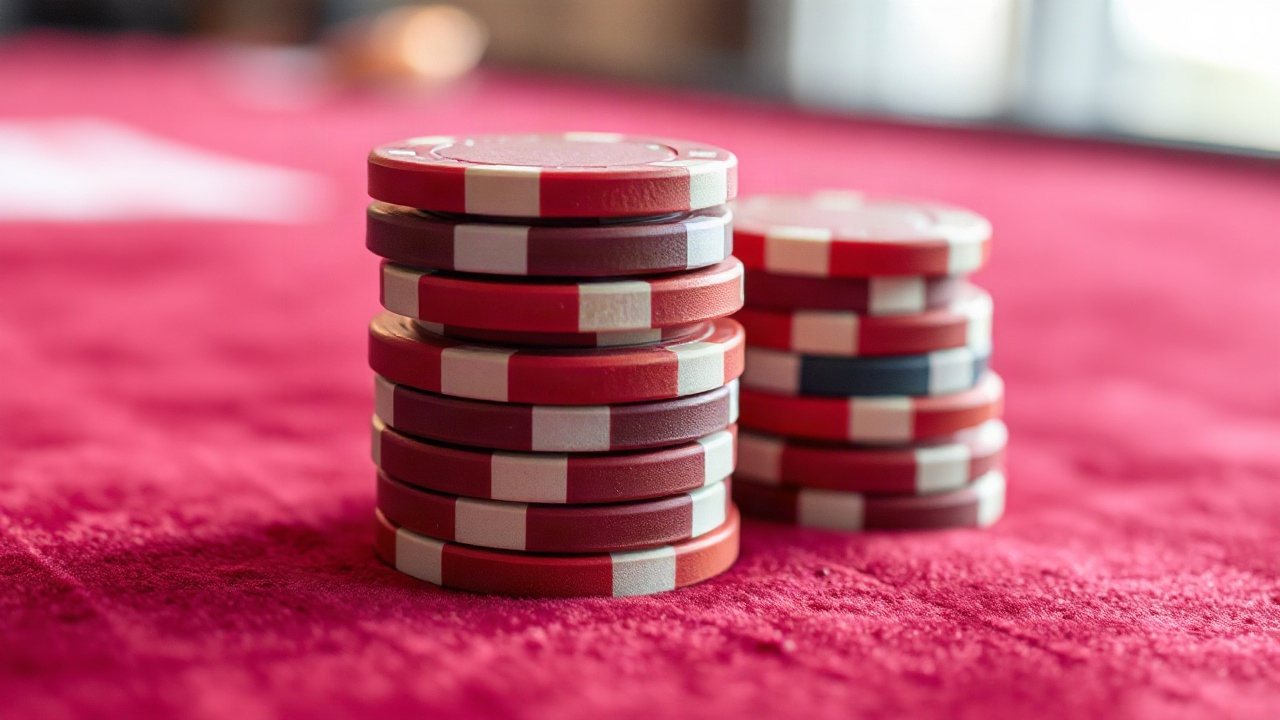
The term ‘whale’ is often used in the industry to describe the highest level of players. For these individuals, the philosophy of risk is different from the general public. They view risk as a commodity that can be bought and sold. By playing a high volatility slot, they are essentially buying ‘exposure’ to a massive event. They aren’t looking for a ‘fair’ game; they are looking for a ‘big’ game. The logic is simple: if you are going to risk money, risk it for a reward that matters.
This philosophy extends to how they view the ‘house edge.’ While they know the house always has an advantage, they also know that the house’s advantage is based on an average. In the short term, and in the extremes of volatility, the ‘average’ doesn’t exist. A high roller is trying to live in that statistical anomaly—the 0.01% of the curve where the player wins a fortune. They aren’t trying to beat the casino over a lifetime; they are trying to beat it in a single, glorious moment.
There is also a sense of ‘adventure’ in the risk. For someone with significant financial resources, small wins provide no dopamine hit. They need the threat of a significant loss to make the win meaningful. It is the ‘Skin in the Game’ principle. Without the risk of a dry spell, the eventual jackpot would feel hollow. The volatility provides the contrast necessary for the win to shine.
The Evolution of Bonus Buy Features
One of the most controversial and popular features for high rollers is the ‘Bonus Buy’. This allows a player to skip the base game entirely and pay a premium—usually 50x to 500x their stake—to trigger the bonus round immediately. For high rollers, time is often more valuable than the ‘grind’ of the base game. They would rather pay for the high-volatility portion of the game directly than wait for it to happen organically.
This feature has changed the way high-stakes slots are designed. Some games now offer ‘Super’ or ‘Extreme’ bonus buys that are only available through this direct purchase. These versions of the game are often even more volatile than the standard bonus, with guaranteed multipliers or extra wilds. For the high roller, this is the ultimate expression of ‘Volatility as Art.’ They are essentially betting on a single, high-intensity event that lasts only a few minutes.
Pros and Cons of Bonus Buys
- Pro: Immediate access to the highest-paying parts of the game.
- Pro: Saves time by eliminating thousands of ‘filler’ spins.
- Con: Extremely expensive and can deplete a bankroll in minutes.
- Con: Removes the ‘build-up’ and narrative of the base game.
Decoding the Software Providers
Not all high-volatility slots are created equal. Different software providers have different ‘philosophies’ of volatility. Some focus on ‘sticky’ potential, where the win builds up slowly during a bonus. Others focus on ‘out of nowhere’ potential, where a single spin in the base game can pay 50,000x. High rollers often develop a loyalty to specific providers whose mathematical models align with their personal risk tolerance.
Providers like Nolimit City, Hacksaw Gaming, and Relax Gaming have become legendary in the high-stakes community. They are known for pushing the boundaries of what is possible in slot math. Their games are often described as ‘volatile’ or ‘brutal,’ which acts as a badge of honor. High rollers study these providers, looking for the nuances in how their ‘random’ features are triggered and how the ‘max win’ is achieved.
| Provider | Typical Volatility Style | Signature Mechanic |
|---|---|---|
| Nolimit City | Extreme / Complex | xWays, xNudge, xCluster |
| Hacksaw Gaming | High / Dark | VS symbols, Multiplier Duels |
| Relax Gaming | High / Classic-Modern | Money Train style Respins |
| Pragmatic Play | High / Accessible | Multi-level Free Spins |
The Future of High-Variance Gaming
As technology evolves, the way volatility is delivered will continue to change. We are already seeing ‘dual-volatility’ slots where players can choose their risk level at the start of the game. We are also seeing the rise of social elements, where high rollers can join ‘tournaments’ or ‘battles’ based on who can achieve the highest multiplier. This adds a layer of competition to the solitary act of spinning the reels.
However, the core appeal will remain the same. The art of volatility is the art of the unknown. As long as there are people who want to challenge the odds and seek the extraordinary, there will be a place for slots that refuse to pay easily. These machines are the last frontier of digital risk, a place where the math is cold, the outcomes are rare, but the rewards are truly legendary. The high roller doesn’t play despite the volatility; they play because of it. They are the artists of the high-stakes world, and the reels are their canvas.